Do you need a roof replacement permit in Florida?
By Mario Bailey Last checked
- Always required
- 16
- of 28 jurisdictions
- Conditional
- 12
- depends on size or scope
- Not required
- 0
- exempt outright
Roof Replacement Permit rules nationwide, beyond Florida.
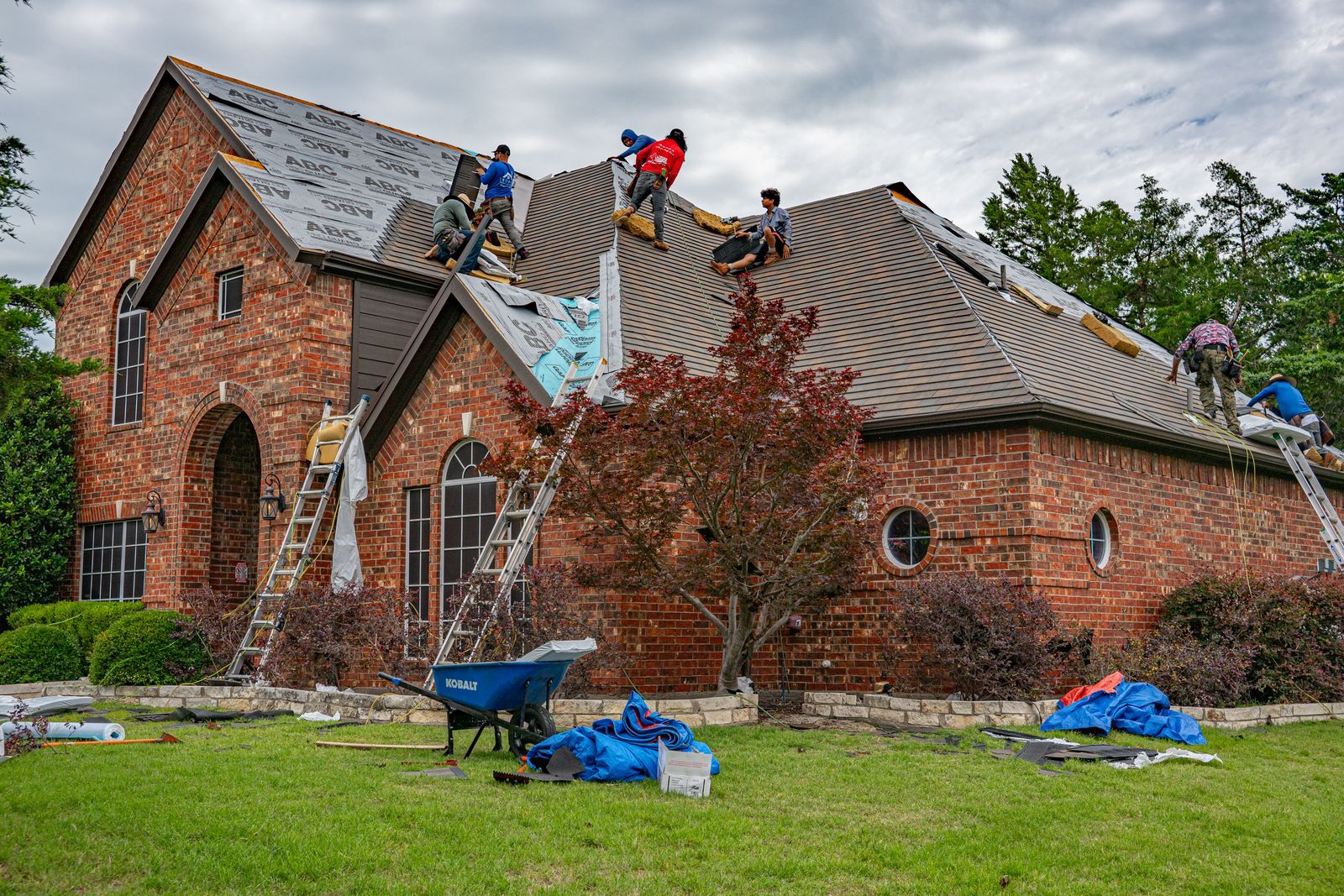
Requirements and size thresholds for roof replacement permits vary by locality. The table below compares what each Florida county or city requires. Always confirm with the local office before starting.
Comparing states? See roof replacement permit rules across every locality we cover.
What to know about roof replacement permits in Florida
Roof replacement permit rules in Virginia depend on the scope of work. Simple shingle replacement is often exempt under state code, while structural or sheathing work usually needs a permit. Costs depend on roof size and materials, and a licensed roofing contractor helps ensure the work passes any required inspection.
The application steps and inspection sequence for roof replacement permits come from the model code rather than from Florida law, so they read the same wherever you build. We keep that walkthrough in one place: how a roof replacement permit application and its inspections work, start to finish. What changes between Florida jurisdictions is below: who requires a permit, what they charge, and which office you file with.
Swipe sideways to see thresholds and confidence.
| Locality | Permit required? | Typical threshold | Confidence |
|---|---|---|---|
| Alachua County | Conditional | area of roof repair or replacement | Confirmed on official page |
| Brevard County | Yes | Not specified | Confirmed on official page |
| Broward County | Conditional | under F.S. 553.79(1)(g) (HB 803, ch. 2026-63, effective 2026-07-01), work valued at less than $7,500 on a single-family dwelling qualifies for exemption upon a written exemption request with documentation of the nature and value of the work; the exemption excludes electrical, plumbing, structural, mechanical, and gas work and any property in a flood hazard area; the statute does not name roofing, so a non-structural reroof under that value can qualify; confirm with Broward County Building Code Division. | Confirmed on official page |
| Charlotte County | Yes | Roof repairs less than 100 square feet (one square) where the work does not include repairs to trusses or rafters do not require a permit. | Confirmed on official page |
| Clay County | Yes | Not specified | From an official source |
| Collier County | Yes | Collier County's locally adopted building code amendment exempts from permit only the repair of any roof covering not exceeding $1,500.00 in value of materials and labor, or repair work not exceeding two roofing squares (200 square feet) in extent; this exemption is for roof repair, not for roof replacement/reroofing (removing and replacing the covering), which requires a standard Reroof permit. | Confirmed on official page |
| Escambia County | Conditional | A Re-Roofing Permit is required for re-roofs exceeding 2 squares (1 square equals 100 square feet, so 2 squares equals 200 square feet); roof repair work under two squares does not require a permit. | Confirmed on official page |
| Hernando County | Yes | Roof repairs covering less than 100 square feet of existing roof are exempt from a building permit; this exemption does not extend to a full roof replacement | Confirmed on official page |
| Hillsborough County | Conditional | permit required when more than 25 percent of total roof area is replaced or recovered in a 12-month period; separately, under F.S. 553.79(1)(g) (HB 803, ch. 2026-63, effective 2026-07-01), work valued at less than $7,500 on a single-family dwelling qualifies for exemption upon a written exemption request with documentation of the nature and value of the work; the exemption excludes electrical, plumbing, structural, mechanical, and gas work and any property in a flood hazard area; the statute does not name roofing, so a non-structural reroof under that value can qualify; confirm with Hillsborough County Development Services. | Confirmed on official page |
| Jacksonville | Yes | Not specified | Confirmed on official page |
| Lake County | Yes | Not specified | Confirmed on official page |
| Lee County | Conditional | Under s. 553.79(1)(g) F.S., effective 2026-07-01, the county must exempt work on a single-family dwelling valued at less than $7,500 upon written request, but the exemption does not apply to structural, electrical, plumbing, mechanical, or gas work or to property in a flood hazard area. | Confirmed on official page |
| Leon County | Yes | Not specified | Confirmed on official page |
| Manatee County | Yes | Not specified | Confirmed on official page |
| Marion County | Yes | Roofing repair of 100 square feet or less does not require a permit | From an official source |
| Miami-Dade County | Conditional | under F.S. 553.79(1)(g) (HB 803, ch. 2026-63, effective 2026-07-01), work valued at less than $7,500 on a single-family dwelling qualifies for exemption upon a written exemption request with documentation of the nature and value of the work; the exemption excludes electrical, plumbing, structural, mechanical, and gas work and any property in a flood hazard area; the statute does not name roofing, so a non-structural reroof under that value can qualify; confirm with Miami-Dade County Department of Regulatory and Economic Resources. Much of Miami-Dade County lies in flood hazard areas where this exemption does not apply. | Confirmed on official page |
| Orange County | Conditional | under F.S. 553.79(1)(g) (HB 803, ch. 2026-63, effective 2026-07-01), work valued at less than $7,500 on a single-family dwelling qualifies for exemption upon a written exemption request with documentation of the nature and value of the work; the exemption excludes electrical, plumbing, structural, mechanical, and gas work and any property in a flood hazard area; the statute does not name roofing, so a non-structural reroof under that value can qualify; confirm with Orange County Division of Building Safety. | Confirmed on official page |
| Osceola County | Yes | Not specified | Confirmed on official page |
| Palm Beach County | Conditional | Non-structural roof work (e.g. roof covering only, not sheathing or framing) valued under $7,500 on a single-family home outside a special flood hazard area may qualify for a written permit-exemption request under F.S. 553.79(1)(g); electrical, plumbing, structural, mechanical, and gas work are excluded regardless of value; structural roof work or any project at or above $7,500 requires a standard Type 1 Building Permit ('Reroofing') with dry-in and final inspections. | Confirmed on official page |
| Pasco County | Conditional | Under F.S. 553.79(1)(g) effective 2026-07-01, work valued at less than $7,500 on a single family dwelling that is not structural, electrical, plumbing, mechanical, or gas work is exempt outside flood hazard areas after a written exemption request with documentation; Pasco separately exempts roof repairs of 1.5 squares or less and liquid roof coatings. | Based on building code |
| Pinellas County | Conditional | non-structural roof work (e.g. roof covering only, not sheathing or framing) with a total project value under $7,500 on a single-family home outside a flood hazard area may qualify for a written permit-exemption approval from the County Building Official instead of a standard permit; structural roof work, any work on a flood-zone property, or any project at or above $7,500 requires a standard roofing permit | Confirmed on official page |
| Polk County | Conditional | From July 1, 2026, F.S. 553.79(1)(g) requires exemption of work valued at less than $7,500 on a single-family dwelling if the work is not electrical, plumbing, structural, mechanical or gas work, the property is not in a flood hazard area, and a written exemption request with value documentation is submitted; Polk County separately exempts minor roof repairs affecting less than 25 percent. | Confirmed on official page |
| Santa Rosa County | Yes | Not specified | Confirmed on official page |
| Sarasota County | Yes | A building permit is not required for repair of a small, incidental roof leak limited to one roofing square and $500 or less in cost; a permit is required for roof replacement and for repair or replacement of structural roof components such as sheathing. | Confirmed on official page |
| Seminole County | Yes | Roof repairs not exceeding 100 square feet do not require a permit; roof repairs exceeding 100 square feet do require one | Confirmed on official page |
| St. Johns County | Yes | Not specified | Confirmed on official page |
| St. Lucie County | Conditional | A permit is required for any reroof work exceeding 25% of the existing roof area within a 12-month period. | Confirmed on official page |
| Volusia County | Yes | Not specified | Confirmed on official page |
| No localities match your filter. | |||
What a roof replacement permit costs in Florida
25 Florida jurisdictions we cover publish a fee figure for this work. Each line is quoted from that office's own schedule and linked to its citation. The figures are not comparable to one another: some are flat minimums, some a percentage of job value, some charged per fixture, so what you pay depends on which schedule applies and on your job's valuation.
Flat fee: Roof: New Residential $220.00, Roof: Repair Residential $220.00, per the Building Fee Schedule effective 11/01/2025.
last checked
Brevard's Residential Reroof Permit Application fee table lists a Building Code Review fee of $75.00 for the first $1,000 of job value plus $3.25 per $1,000 thereafter, plus a $25.00 Application Processing Fee and state surcharges of 1.5% (BCA) and 1% (FBC); no Land Development, Natural Resources, or Zoning Review line items are listed for reroofs, unlike some other residential permit types. No effective date is shown.
last checked
Structural permit with a roofing-specific minimum: the greater of a $250 minimum base roofing permit fee or 3.0% of job value, per Section 40.29 (Ord. 2025-038, eff. 5-1-25)
last checked
At application: building fee of 0.004 x ICC valuation (if valuation is $50,000 or more) plus a 0.025 x building-fee surcharge; no flat fee is listed for roof permits, unlike most other residential permit types.
last checked
FY24/25 Building Fee Schedule: 'Roofing per 100 square feet' $10.00. Commercial reroofing is billed under 'Renovation or Modification of Commercial Buildings... this includes roofing' at $8.00 per $1,000 of value or fraction thereof, effective January 1, 2025. (Resolution No. 2023/2024-97, effective October 1, 2024.)
last checked
No roof-specific line item is published; reroof/roof-replacement permits are billed under the general Structural and Floodplain Permit Review Fees (Resolution 2025-231, Section N): valuation up to $4,999.99 is $100.00 plus applicable inspection fees; new-construction-rate review above that is $0.11 per square foot with a $150.00 minimum.
last checked
Roofing, Residential: $190.00, per Resolution No. 2026-037 (effective March 3, 2026).
last checked
Residential Roofing trade permit fee is $250 flat, inspection-only single-trade permit with no plan review, full fee due at submission, per Building Permit Fee Schedule effective October 5, 2024
last checked
City Fees schedule (Municipal Code Section 320.409), Building Inspection Division (10) Roofing (excludes original roofing on new one- and two-family dwellings and original roofing on additions/accessory buildings for single-family dwellings): $10.00 BID permit fee per 1,000 square feet or fractional part; an $80.00 minimum for roofing permits not requiring an inspection; a $150.00 minimum where one or more inspections are required; $10.00 for roofing repairs under 500 square feet; a $17.50 C&D Debris fee.
last checked
Residential Roofing (per square foot): $0.03, per the county's FY 2026 Adopted Fee Schedule (Office of Building Services).
last checked
Fee schedule effective 2026-04-15: $50 application fee and $35 technology fee per application plus an operational support fee; roofing plan review $25 initial, structural inspection $100, roofing fees assessed per structure
last checked
Fee Schedule, "Repair Work and Exterior Alteration Permits" flat-fee category: "Re-roof or Roof Re-cover $241.45."
last checked
Manatee County Development Services Building Fee Schedule, effective 04/01/2023 (R-23-043, R-23-045, R-23-046): Roof Express (Residential Only) $153 without virtual inspection, $118 with virtual inspection, for removal and replacement of shingle, metal, TPO, tile, or wood shake; Roof Standard $153 for commercial roofs.
last checked
Res Re-Roof (Roof-over Alum, Shingles, Metal or MH): $125.00 plus $20 per unit, per Resolution 25-R-295 (effective Oct. 1, 2025).
last checked
Re-roofing is charged per square foot of roof coverage including overhangs at $0.11 for shingle and other types or $0.140 for tile, subject to the $147 residential building permit minimum, per Implementing Order 4-63 effective 6/30/2025
last checked
Residential re-roof permit fee is a $26 minimum for the first $1,000 of value plus $5 per additional $1,000, per the FY2025-26 Fee Directory's Residential Fees table
last checked
Appendix A lists 'Re-roofing Permit' at $80.00 (no plan review fee required); 'Re-roofing Permits involving the removal and replacement of solar panels' at $150.00; and 'Re-roofing Permits involving Solar Shingles' at $150.00 (both solar re-roof lines require the solar, electrical, and roofing contractors to all be listed on the permit). Effective October 1, 2025, per Resolution #25-036R.
last checked
Charged by value of construction with a $75 minimum for reroofing a single family, duplex or attached residence, per the PZB Building Division fee schedule
last checked
Base permit fee $45 plus $40 per unit for residential reroof with mitigation or $20 per unit without mitigation per posted fee Resolution 18-17
last checked
$180 covers the first 20 squares of a residential reroof plus $1.50 per additional square, per Building Stand Alone Permits V-H of the FY26 BDRS schedule
last checked
Residential re-roof is listed in Construction Fees Resolution 17-025; building permit fee by valuation, residential fee starts at $85.00 for work valued up to $12,000; fees due at permit issuance.
last checked
Resolution No. 2025-29 lists 'Roofing Permit New or Re-roof' at $67.00 (single-family detached) / $133.00 (all other construction), plus $199.50 (all other construction) for a 'Special Membrane Roof that requires multiple inspections'.
last checked
Re-roof: $30.00 base permit fee plus $6.00 per $1,000 value of construction; an additional $60.00 roof permit fee applies when a roof permit is issued together with a building permit by a roofing contractor. Per the Section 20.10 fee schedule (Resolution 2024-R-139, adopted Dec. 12, 2023).
last checked
No re-roof-specific fee line item is published. Roof replacement permits fall under the general Building Services Fees table: Permit Issuance Fee $14.00, plus Total Valuation of Building fee (minimum $19.00, or $11.00 for the first $1,000 plus $2.63 for each additional thousand up to $50,000; higher tiers apply above that), per St. Johns County's Schedule of Fees and Services, Exhibit A (amended 07/21/2026).
last checked
Volusia County Building Permit Fee Schedule (Resolution 2005-191, as revised October 1, 2025, reflecting a 2.7 percent CPI increase), Exhibit A, Additional Fees: "Roofing permits (minimum)..... $134.71".
last checked
Jurisdictions not listed publish no dollar figure we could quote. Absence does not mean a permit is free.
Common questions about roof replacement permits in Florida
- Do I need a roof replacement permit in Florida?
- In most of Florida, yes. Permits are issued locally, so the answer comes from your Florida city or county rather than a single statewide rule. Of the 28 Florida jurisdictions we have verified for roof replacement work, 16 require a permit outright, 12 depend on the size or scope of the job, and 0 require none.
- Is there a roof replacement permit exemption in Florida?
- 12 of the 28 Florida jurisdictions we cover set a threshold rather than a flat rule, so the same job can be exempt in one Florida county and permitted in the next. The table above lists each Florida jurisdiction's published threshold in its own words, with the source and the date we verified it.
Ready to move on your roof replacement permit?
Hire it out
Sponsored
Roofers handle the permit in most localities when one is required. Comparing bids before you sign is the useful next step.
Compare roofing quotes on Angi
Sponsored link. PermitNotebook may earn a fee if you request quotes through it. Partners never influence our permit data.
Planning more than a roof replacement permit? Check your whole project