Maryland / Prince George's County
Patio Permit in Prince George's County, Maryland
It depends
Sometimes, depending on the project
Before building an at-grade patio of 500 square feet or more, before building any above-grade patio, before building a patio cover, and before building any patio of any size that includes stairs or ramps for an elevation change.
Issued byPrince George's County Department of Permitting, Inspections and Enforcement (DPIE)
By Mario Bailey, verified against official sources
Quick answer
An at-grade masonry patio of less than 500 square feet needs no building permit in Prince George's County, but at 500 square feet or more a Building Permit is required, and so is any patio of any size that adds stairs or ramps because of an elevation change. Above-grade patios and patio covers always require a building permit. The county's code exemption is written more broadly as all forms of paving less than 500 square feet except parking surfaces, per property or lot, which is why DPIE's chart also notes that an exempt at-grade patio cannot be used to park vehicles. If the lot is served by a private well or septic, even an at-grade patio must be reviewed by the Quality and Septic Systems Program to confirm septic tank access is preserved.
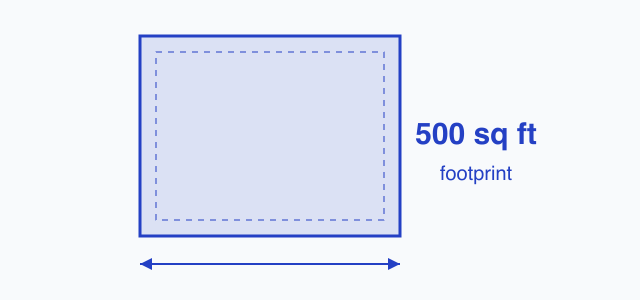
Typical threshold: area of an at-grade patio, with a permit required at any size if stairs or ramps are built due to elevation change.
Who is pulling this permit?
Apply yourself
Hire it out
Sponsored
If a contractor builds your patio, they usually handle any required permit as part of the job. Compare a few bids before you commit.
Compare patio contractor quotes on Angi
Sponsored link. PermitNotebook may earn a fee if you request quotes through it. Partners never influence our permit data.
When a permit is usually needed
Before building an at-grade patio of 500 square feet or more, before building any above-grade patio, before building a patio cover, and before building any patio of any size that includes stairs or ramps for an elevation change.
What your patio permit must meet in Maryland
Maryland adopts the 2021 IRC as the uniform statewide residential code, but its amendment list keeps only two of the model code's optional appendices in force, and the model code's prescriptive patio-cover appendix is not one of them.
- The statewide baseline is the 2021 International Residential Code, incorporated by reference in the Maryland Building Performance Standards (COMAR 09.12.51.04).
- Maryland replaced the model code's appendix list with a shorter one adopting only Appendix AF (Radon Control Methods) and Appendix AQ (Tiny Houses); the patio-cover appendix (Appendix AH) is not adopted statewide, so a prescriptive patio-cover path exists only where a local jurisdiction separately adopts it (COMAR 09.12.51.04.C).
Based on 2021 IRC, adopted via COMAR 09.12.51 Maryland Building Performance Standards; Appendix AH not carried into the state appendix list. Read the code. Local amendments can be stricter; confirm the current requirement with your office before you build.
What a patio permit costs in Prince George's County
How Prince George's County compares in Maryland
No Maryland jurisdiction we have verified sets a size threshold for this permit, so what actually differs between them is the fee.
| Jurisdiction | Permit needed? | Typical fee |
|---|---|---|
| Howard County | No permit needed | ...county's residential permit handout, needing no filing fee and a flat $50... |
| Montgomery County | No permit needed | No fee for a ground-level concrete or paver patio since no permit is required |
| Prince George's Countythis page | It depends | ...line item "Patio - Residential > 500 Sq Ft", minimum permit fee $151:... |
Closest patio permit thresholds outside Maryland
Jurisdictions we cover whose limit sits nearest Prince George's County's 500 sq ft.
- Pasco County, Florida, Non structural concrete flatwork under 500 square feet per parcel that will not be built on is exempt outside special flood hazard areas; slabs intended for a future structure require a permit with sealed plans.
- San Diego, California, patio cover accessory to a dwelling under 300 sq ft of projected roof area and no taller than 12 ft and not in a yard setback does not require a permit
- Corpus Christi, Texas, Every attached patio cover or carport needs a permit regardless of size; a detached patio cover or carport needs one once it is larger than 200 square feet.
- Dallas, Texas, detached patio covers of 200 sq ft or less on single-family or duplex premises are exempt; attached patio covers and those over 200 sq ft require a permit
How to apply in Prince George's County
In Prince George's County, applying for a patio permit means submitting a site plan and framing plans for a roofed patio cover, since a cover is treated as its own permitted structure regardless of size. A plain concrete or paver patio slab at or near grade is, by contrast, often exempt from that same building permit requirement.
What most patio permit applications include:
- Filing a permit application with the local building department, which only the property owner or an authorized agent may sign, since a patio cover is treated as its own permitted structure regardless of size (IRC R105.1).
- For Prince George's County, a scaled site plan showing the new patio cover's size and location relative to the house and other existing structures, with dimensioned distances to all property lines so required setbacks can be verified before the permit is approved (IRC R106.2).
- Construction documents such as a framing plan and elevation, showing rafter or beam sizes and spacing, the distance between supporting posts, and the method of attachment to the house, drawn with enough clarity for the building official to confirm the work will conform to the code (IRC R106.1).
- For the roof structure itself, plans showing compliance with the patio cover appendix's structural limits, such as adequate footing sizes for the applied post loads, since a shallow slab on grade may substitute for a deeper footing only in limited cases up to about 750 pounds of load per post (IRC Appendix AH, Section AH105.2).
- By contrast, an at grade concrete or paver patio that is not attached to the dwelling and stays within the code's small flatwork thresholds, similar to a sidewalk, driveway, or low deck under 200 square feet and 30 inches high, commonly needs no building permit at all, so none of the plan review steps above apply (IRC R105.2).
General submittal guidance from 2021 International Residential Code (IRC), Sections R105 and R106, with Appendix AH Patio Covers (named Appendix H in the 2012, 2015, and 2018 editions). Source. Prince George's County Department of Permitting, Inspections and Enforcement (DPIE) sets the exact checklist for Prince George's County.
Where to apply in Prince George's County:
Prince George's County Department of Permitting, Inspections and Enforcement (DPIE)
- 9400 Peppercorn Place, Largo, MD 20774
- Phone: 301-636-2000
- Email: dpiebprd@co.pg.md.us
Patio Permit in Prince George's County compared with nearby Maryland localities
| Locality | Permit needed? | Threshold | What each Maryland schedule says | Verified |
|---|---|---|---|---|
| Prince George's County | It depends | area of an at-grade patio, with a permit required at any size if stairs or ramps are built due to elevation change | ...March 2, 2025, line item "Patio - Residential > 500 Sq Ft", minimum permit fee... | |
| Baltimore County | Not confirmed | Not confirmed | Not published | |
| Howard County | No permit needed | Exempt | ...per the county's residential permit handout, needing no filing fee and a flat $50... | |
| Montgomery County | No permit needed | Exempt | No fee for a ground-level concrete or paver patio since no permit is required |
Inspections and closing out your permit
In Prince George's County, a permitted patio cover follows the same footing, frame, and final inspection sequence used for any small accessory structure, since the posts and roof framing have to be checked before they are covered and again once the work is done. An at grade patio slab that qualifies as exempt flatwork usually needs no building inspection at all, because inspections only attach to work that required a permit in the first place.
- In Prince George's County: a footing inspection once the excavation, forms, and any reinforcing steel are in place but before concrete is poured, confirming the posts supporting a patio cover will bear on adequate footings (IRC R109.1.1).
- In Prince George's County: a frame inspection after the rafters, beams, posts, and any required rough in work are in place but before the roof sheathing or covering material conceals them, since a solid patio cover roof cannot be signed off once it is covered without this check (IRC R109.1.4).
- In Prince George's County: a final inspection once all permitted work, including roofing and post anchorage, is complete, which the code requires before the structure may be used (IRC R109.1.6).
- In Prince George's County: an at grade concrete or paver patio that qualifies as exempt flatwork under the permit rules is not subject to any of these inspection stages, since the inspection sequence only attaches to work that required a permit in the first place (IRC R105.2).
- In Prince George's County: each inspection has to be requested by the permit holder rather than happening automatically, and the approved plans and permit card need to be on site and available when the inspector arrives (IRC R109.3).
Schedule each inspection in advance and pass the final before you use the work or close the permit. Request inspections through the Prince George's County permit portal or by phone at 301-636-2000.
Inspection sequence from 2021 International Residential Code (IRC), Section R109 (Inspections). Source. An open permit left un-inspected can surface later in a title search or home sale.
Your Patio Permit checklist for Prince George's County
- Confirm the requirement. Sometimes, depending on the project. Typical threshold: area of an at-grade patio, with a permit required at any size if stairs or ramps are built due to elevation change. Usually needed: Before building an at-grade patio of 500 square feet or more, before building any above-grade patio, before building a patio cover, and before building any patio of any size that includes stairs or ramps for an elevation change.
- Budget the fee. DPIE Fee Schedule, effective March 2, 2025, line item "Patio - Residential > 500 Sq Ft", minimum permit fee $151: "Total Fee = Administrative Fee $66 + Building Permit Fee $151 + $53 Grading Fee + $5 M-NCPPC. Plus Technology Fee 10%.". Official fee schedule.
- Apply. In Prince George's County, applying for a patio permit means submitting a site plan and framing plans for a roofed patio cover, since a cover is treated as its own permitted structure regardless of size. A plain concrete or paver patio slab at or near grade is, by contrast, often exempt from that same building permit requirement. Start at the Prince George's County permit portal.
- Keep the office details handy. Prince George's County Department of Permitting, Inspections and Enforcement (DPIE). Phone: 301-636-2000. Address: 9400 Peppercorn Place, Largo, MD 20774.
- Plan for inspections. In Prince George's County, a permitted patio cover follows the same footing, frame, and final inspection sequence used for any small accessory structure, since the posts and roof framing have to be checked before they are covered and again once the work is done. An at grade patio slab that qualifies as exempt flatwork usually needs no building inspection at all, because inspections only attach to work that required a permit in the first place.
Compiled from the official sources on this page. Last checked .
Frequently asked questions
- Do you need a patio permit in Prince George's County?
- An at-grade masonry patio of less than 500 square feet needs no building permit in Prince George's County, but at 500 square feet or more a Building Permit is required, and so is any patio of any size that adds stairs or ramps because of an elevation change. Above-grade patios and patio covers always require a building permit. The county's code exemption is written more broadly as all forms of paving less than 500 square feet except parking surfaces, per property or lot, which is why DPIE's chart also notes that an exempt at-grade patio cannot be used to park vehicles. If the lot is served by a private well or septic, even an at-grade patio must be reviewed by the Quality and Septic Systems Program to confirm septic tank access is preserved. Area of an at-grade patio, with a permit required at any size if stairs or ramps are built due to elevation change. Always confirm with the office before starting.
- How much does a patio permit cost in Prince George's County?
- DPIE Fee Schedule, effective March 2, 2025, line item "Patio - Residential > 500 Sq Ft", minimum permit fee $151: "Total Fee = Administrative Fee $66 + Building Permit Fee $151 + $53 Grading Fee + $5 M-NCPPC. Plus Technology Fee 10%.". See the official fee schedule for current amounts.
- How long does a patio permit take in Prince George's County?
- Patios are on DPIE's Virtual Permit Center eligible list, where a complete application with fees paid can be issued the same day. Times can vary by workload and project scope, so confirm with the office.
- Where do you apply for a patio permit in Prince George's County?
- You can apply through the Prince George's County permit portal or contact the Prince George's County Department of Permitting, Inspections and Enforcement (DPIE) directly. The links are listed on this page.
- Can a homeowner pull a patio permit themselves in Prince George's County?
- Under Maryland law (Md. Code, Bus. Occ. and Prof. 12-301(b), 6-607(1); Public Safety 12-505): It depends on the trade and the county. Plumbing: state law exempts an individual who personally provides plumbing services in their own residence, but homeowners may not make final connections between the residence and public or private water supply or disposal systems, and Baltimore County plus the WSSC-area counties are largely carved out of the state plumbing title. Electrical: the Maryland Electricians Act prohibits providing electrical services for compensation without a license; it has no express homeowner exemption, so uncompensated work on one's own home falls outside the licensing prohibition, but each county decides whether it will issue an electrical permit to an unlicensed homeowner. Building permits are issued by local jurisdictions, which set their own owner-applicant rules. Confirm how Prince George's County applies this before you apply.
From the Library
What else needs a permit in Prince George's County
Every other permit type we have verified for this jurisdiction, with the rule that applies here.
| Project | Permit needed? | Threshold | Typical fee |
|---|---|---|---|
| Deck Permit | Permit required | Any size | ...effective March 2, 2025, line item "Deck or Pergola", minimum permit fee $151.00:... |
| Electrical Permit | Permit required | Any size | ...work by item: "Electrical Permit Fee - Rough Wire Outlet, Segment of 15"... |
| Fence Permit | It depends | fence height above grade, with a permit required at any height on a corner lot, in a historic or protected area, or in the 100-year floodplain | ...effective March 2, 2025, line item "Fence - Residential", minimum permit fee $145:... |
| HVAC Permit | It depends | Before installing or replacing a furnace, boiler, heat pump, central air conditioner... | ...line item "Mechanical Permit - Commercial/Residential", minimum permit fee $86:... |
| Plumbing Permit | It depends | Before installing new plumbing or natural gas piping, before replacing a water heater... | See schedule |
| Pool Permit | It depends | prefabricated pools accessory to one- and two-family dwellings that are installed entirely above ground, hold no more than 5,000 gallons, and have a four-foot fence around the pool perimeter | ...March 2, 2025: "Swimming Pool (In-ground) - Residential", minimum permit fee $297... |
| Roof Replacement Permit | It depends | Before replacing roof sheathing or plywood, or doing any roof work that involves... | ...Residential" to "Alteration/Repair without U&O - Exterior", minimum permit fee... |
| Shed Permit | It depends | floor space of a one-story detached accessory structure, and only one such exempt structure is allowed per property | DPIE Fee Schedule, effective March 2, 2025, line item "Shed > 150 Sq Ft", $1.17 per SF:... |
| Solar Permit | Permit required | Any size | ...2, 2025: "Solar Panels (Roof-mounted) - Residential", minimum permit fee $158... |
Patio Permit in other Maryland localities
Everything above, sourced
Code references
National and state model-code sections the general guidance on this page is drawn from. They are not Prince George's County documents; the office above sets the local rules.
- 2021 International Residential Code (IRC), Sections R105 and R106, with Appendix AH Patio Covers (named Appendix H in the 2012, 2015, and 2018 editions)
- 2021 International Residential Code (IRC), Section R109 (Inspections)
- 2021 IRC, adopted via COMAR 09.12.51 Maryland Building Performance Standards; Appendix AH not carried into the state appendix list
How this patio permit page for Prince George's County was verified. 2 official sources: princegeorgescountymd.gov, princegeorgescountymd.gov; fee schedule: official document. Last checked by Mario Bailey, not confirmed with Prince George's County Department of Permitting, Inspections and Enforcement (DPIE). Rules change; confirm before you build. How we verify.
Last checked: Report an error on this page
Compare Patio Permit requirements across Maryland localities