Shed Permit in New York City, New York
It depends
Sometimes, depending on the project
Before installing a storage shed that exceeds any of the five limits in 1 RCNY 101-14 Table 1, or any accessory structure at a building other than a one- or two-family dwelling.
Issued byNew York City Department of Buildings (DOB)
By Mario Bailey, verified against official sources
Quick answer
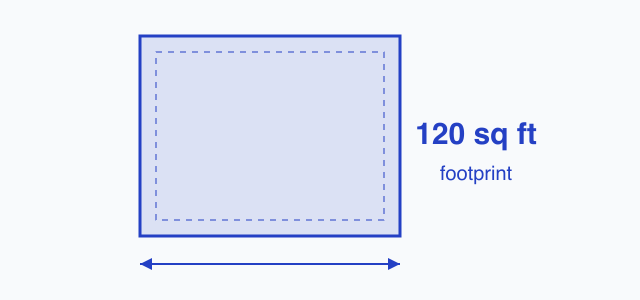
1 RCNY 101-14 Table 1 exempts a temporary portable freestanding shed accessory to a one- or two-family dwelling only when all five conditions are met at once: 120 square feet or less in area, no more than 7 feet 6 inches high, at least 3 feet from any lot line, not obstructing a required window, used for household storage, and one per tax lot. Miss any one of them and the shed becomes an alteration that a Registered Design Professional has to file. DOB warns that the exemption does not authorize work that violates the Zoning Resolution or any other law, and does not remove any obligation to file with other City agencies such as Landmarks. Note that in DOB usage a "shed permit" more often means a sidewalk shed, which is a separate construction-equipment filing.
Typical threshold: temporary portable freestanding sheds accessory to a one- or two-family dwelling that are also no more than 7 feet 6 inches high, at least 3 feet from every lot line, used for household storage, do not obstruct a required window, and are the only such shed on the tax lot.
Who is pulling this permit?
Apply yourself
Hire it out
Sponsored
If a contractor builds or places your shed, they usually handle any required permit. Compare a few bids before you commit.
Compare contractor quotes on Angi
Sponsored link. PermitNotebook may earn a fee if you request quotes through it. Partners never influence our permit data.
When a permit is usually needed
Before installing a storage shed that exceeds any of the five limits in 1 RCNY 101-14 Table 1, or any accessory structure at a building other than a one- or two-family dwelling.
What a shed permit costs in New York City
How New York City compares in New York
That is the strictest shed permit threshold among the New York jurisdictions we have verified: Buffalo, Rochester, and Town of Brookhaven allow up to 144.
| Jurisdiction | Permit needed? | Threshold |
|---|---|---|
| Buffalo | It depends | gross floor area of a one story detached tool or storage shed, playhouse or similar accessory building at a one- or two-family dwelling or townhouse |
| New York Citythis page | It depends | temporary portable freestanding sheds accessory to a one- or two-family dwelling that are also no more than 7 feet 6 inches high, at least 3 feet from every lot line, used for household storage, do not obstruct a required window, and are the only such shed on the tax lot |
| Rochester | It depends | gross floor area of a one-story detached storage shed accessory to a one- or two-family dwelling |
| Town of Brookhaven | It depends | detached one-story storage shed larger than 144 square feet, or any shed not located in the rear yard |
| Town of Hempstead | Permit required | Any size |
Closest shed permit thresholds outside New York
Jurisdictions we cover whose limit sits nearest New York City's 120 sq ft.
- Alameda County, California, Floor area of a one-story detached tool or storage shed accessory to a house, at which the building permit exemption stops
- Aurora, Colorado, shed floor area at which a building permit is required
- Baltimore County, Maryland, accessory structure floor area
- Boston, Massachusetts, one-story detached accessory sheds used for tools or storage are exempt if floor area does not exceed 120 sq ft
How to apply in New York City
In New York City, a residential shed permit application, once the shed is large enough to require one, is a set of construction documents that show what will be built and prove it meets the adopted residential code. In practice that means a written permit application, a scaled site plan locating the shed and its distances to the property lines, and construction documents covering the shed's foundation or anchoring system and its framing.
What most shed permit applications include:
- For New York City, a written permit application identifying the proposed work and describing the property by its address or legal description, filed with the building department before construction begins (IRC R105.3).
- For New York City, a scaled site plan showing the shed's size and location and its dimensioned distances to all property lines so required setbacks can be verified before the permit is issued (IRC R106.2).
- Construction documents showing the shed's foundation: freestanding accessory structures at or under the code's small-structure size and eave-height limits (600 square feet and a 10 foot eave height in the model code) are exempt from continuous footings but must still be shown supported on undisturbed soil or engineered fill and anchored to resist wind-induced uplift and overturning (IRC R403.1).
- Where the shed does sit on a continuous foundation with a wood sill plate, anchor bolt or approved strap details tying the sill plate to the foundation (IRC R403.1.6).
- Roof framing details showing the rafter-to-wall or truss-to-wall connections, since even a shed exempt from continuous footings must be anchored to resist wind-induced uplift and overturning (IRC R403.1; R802.11).
General submittal guidance from IRC R105.3 (permit application), R106.2 (site plan), R403.1 (footings and anchorage for accessory structures), and R403.1.6 (sill anchorage), 2021 IRC. Source. New York City Department of Buildings (DOB) sets the exact checklist for New York City.
Where to apply in New York City:
New York City Department of Buildings (DOB)
- 280 Broadway, New York, NY 10007
- Phone: (212) 566-5000
Shed Permit in New York City compared with nearby New York localities
| Locality | Permit needed? | Threshold | What each New York schedule says | Verified |
|---|---|---|---|---|
| New York City | It depends | temporary portable freestanding sheds accessory to a one- or two-family dwelling that are also no more than 7 feet 6 inches high, at least 3 feet from every lot line, used for household storage, do not obstruct a required window, and are the only such shed on the tax lot | ...two- or three-family Alteration Type 2 or Type 3 minimum filing fee of $130.00... | |
| Buffalo | It depends | gross floor area of a one story detached tool or storage shed, playhouse or similar accessory building at a one- or two-family dwelling or townhouse | ...line "Sheds and garages (over 144 square feet and under 600 square feet)" $75.00... | |
| Rochester | It depends | gross floor area of a one-story detached storage shed accessory to a one- or two-family dwelling | Building Permit Fees are based on the actual cost of work: $75.00 for $0 to $2,000... | |
| Town of Brookhaven | It depends | detached one-story storage shed larger than 144 square feet, or any shed not located in the rear yard | See schedule | |
| Town of Hempstead | Permit required | Any size | ...Town Code 86-11C(1) as amended by Local Law No. 20-2024 (effective 4-2-2024): $200... |
Inspections and closing out your permit
In New York City, a permitted shed is inspected in stages as it goes up: the foundation or the anchors that hold it down before they are covered, the framing before it is enclosed, and a final inspection once the shed is finished. Each stage checks the items that would be hidden or unsafe if skipped.
- Foundation or anchor inspection in New York City: called after any required footings, piers, or ground anchors are set and any forms or reinforcing steel are in place, but before concrete is placed, so the foundation or anchoring system can be verified before it is covered (IRC R109.1.1).
- Frame inspection in New York City: after the shed is framed, sheathed, and braced, the inspector checks the framing, bracing, fasteners, and the roof connections that resist wind uplift, before those elements are covered (IRC R109.1.4 frame inspection; R403.1 anchorage).
- Final inspection in New York City: made after the permitted work is complete and before the shed is used; work may not proceed past any inspection stage without the building official's approval (IRC R109.1.6 final inspection; R109.4 approval required).
- In New York City: for a pre-fabricated or kit shed, the manufacturer's installation instructions must be on site at the time of inspection so the inspector can confirm the anchoring and assembly match the design (IRC R106.1.2).
Schedule each inspection in advance and pass the final before you use the work or close the permit. Request inspections through the New York City permit portal or by phone at (212) 566-5000.
Inspection sequence from IRC R109.1.1 (foundation inspection), R109.1.4 (frame inspection), R109.1.6 (final inspection), and R106.1.2 (manufacturer's instructions on site), 2021 IRC. Source. An open permit left un-inspected can surface later in a title search or home sale.
Your Shed Permit checklist for New York City
- Confirm the requirement. Sometimes, depending on the project. Typical threshold: temporary portable freestanding sheds accessory to a one- or two-family dwelling that are also no more than 7 feet 6 inches high, at least 3 feet from every lot line, used for household storage, do not obstruct a required window, and are the only such shed on the tax lot. Usually needed: Before installing a storage shed that exceeds any of the five limits in 1 RCNY 101-14 Table 1, or any accessory structure at a building other than a one- or two-family dwelling.
- Budget the fee. No DOB filing fee where the shed meets every condition in 1 RCNY 101-14 Table 1. A shed that needs a permit is filed as an alteration: Table 28-112.2 item 11 sets a one-, two- or three-family Alteration Type 2 or Type 3 minimum filing fee of $130.00, being the "Minimum filing fee for the first $5,000, or fraction thereof, of the cost of alteration; plus $2.60 for each $1,000, or fraction thereof, of cost of alterations in excess of $5,000.". Official fee schedule.
- Apply. In New York City, a residential shed permit application, once the shed is large enough to require one, is a set of construction documents that show what will be built and prove it meets the adopted residential code. In practice that means a written permit application, a scaled site plan locating the shed and its distances to the property lines, and construction documents covering the shed's foundation or anchoring system and its framing. Start at the New York City permit portal.
- Keep the office details handy. New York City Department of Buildings (DOB). Phone: (212) 566-5000. Address: 280 Broadway, New York, NY 10007.
- Plan for inspections. In New York City, a permitted shed is inspected in stages as it goes up: the foundation or the anchors that hold it down before they are covered, the framing before it is enclosed, and a final inspection once the shed is finished. Each stage checks the items that would be hidden or unsafe if skipped.
Compiled from the official sources on this page. Last checked .
Frequently asked questions
- Do you need a shed permit in New York City?
- 1 RCNY 101-14 Table 1 exempts a temporary portable freestanding shed accessory to a one- or two-family dwelling only when all five conditions are met at once: 120 square feet or less in area, no more than 7 feet 6 inches high, at least 3 feet from any lot line, not obstructing a required window, used for household storage, and one per tax lot. Miss any one of them and the shed becomes an alteration that a Registered Design Professional has to file. DOB warns that the exemption does not authorize work that violates the Zoning Resolution or any other law, and does not remove any obligation to file with other City agencies such as Landmarks. Note that in DOB usage a "shed permit" more often means a sidewalk shed, which is a separate construction-equipment filing. Temporary portable freestanding sheds accessory to a one- or two-family dwelling that are also no more than 7 feet 6 inches high, at least 3 feet from every lot line, used for household storage, do not obstruct a required window, and are the only such shed on the tax lot. Always confirm with the office before starting.
- How much does a shed permit cost in New York City?
- No DOB filing fee where the shed meets every condition in 1 RCNY 101-14 Table 1. A shed that needs a permit is filed as an alteration: Table 28-112.2 item 11 sets a one-, two- or three-family Alteration Type 2 or Type 3 minimum filing fee of $130.00, being the "Minimum filing fee for the first $5,000, or fraction thereof, of the cost of alteration; plus $2.60 for each $1,000, or fraction thereof, of cost of alterations in excess of $5,000.". See the official fee schedule for current amounts.
- Where do you apply for a shed permit in New York City?
- You can apply through the New York City permit portal or contact the New York City Department of Buildings (DOB) directly. The links are listed on this page.
- Can a homeowner pull a shed permit themselves in New York City?
- Under New York law (Inside New York City: NYC Admin. Code 28-104.1, 28-105.1, 28-105.4, 28-105.5.1, 28-401.3 (definition of "general contractor"). Outside New York City: N.Y. Exec. Law 381(2); 19 NYCRR 1203.3(a)(1).): New York State sets no owner-builder rule at all outside New York City. Executive Law 381(2) puts administration and enforcement in the hands of each local government, and 19 NYCRR 1203.3(a)(1) only requires each authority having jurisdiction to make building permits mandatory for work that must conform to the codes, leaving who may apply to local law. The state licenses no general contractors and imposes no owner-builder affidavit, disclosure form or post-permit sale restriction of the kind Florida uses, so whether a homeowner may pull the permit is a question for the specific city, town, village or county. New York City is the genuine outlier. Administrative Code 28-105.1 makes the work itself unlawful without a written permit, and Administrative Code 28-104.1 bars the department from issuing that permit until it approves the required construction documents, which must be prepared by or under the supervision of a registered design professional, meaning a licensed architect or engineer, as required by the code. A homeowner therefore cannot self-prepare and file the plans for permit-requiring work in New York City even though Administrative Code 28-105.5.1 defines the permit applicant as the person who performs the work or retains a subcontractor, and even though the general contractor registration definition in Administrative Code 28-401.3 expressly excludes an individual who constructs a residential structure of no more than three dwelling units for his or her own occupancy. Note that Administrative Code 28-105.4 exempts minor alterations and ordinary repairs from the permit requirement entirely, so the design professional bottleneck applies only to work that needs a permit in the first place. Confirm how New York City applies this before you apply.
From the Library
What else needs a permit in New York City
Every other permit type we have verified for this jurisdiction, with the rule that applies here.
| Project | Permit needed? | Threshold | Typical fee |
|---|---|---|---|
| Deck Permit | Permit required | Any size | ...permit: One-, two- or three-family dwelling) sets a minimum filing fee of $170.00... |
| Electrical Permit | It depends | Before any new installation, alteration or repair of electric wires, wiring apparatus... | ...sets "Electrical permit initial application (excluding minor work)" at $40.00, plus... |
| Fence Permit | It depends | fences accessory to one- and two-family dwellings, measured from the higher of the two adjoining grades | ...dwelling) sets an Alteration Type 2 or Type 3 minimum filing fee of $130.00 and an... |
| HVAC Permit | It depends | packaged air-conditioning units installed in an existing one- or two-family dwelling that are not part of an alteration otherwise requiring a permit; the same exemption is capped at 3 tons in all other buildings | ...is a "Filing fee calculated as for respective building alteration" with a $130.00... |
| Plumbing Permit | It depends | direct replacement of an existing fixture or faucet that does not alter the hot and cold shutoff valves or the fixture trap | ...item 11 sets the one-, two- or three-family LAA minimum filing fee at $130.00, and... |
| Pool Permit | It depends | outdoor in-ground or above-ground pools accessory to a one- or two-family dwelling, where the distance from the edge of an in-ground pool to any building or lot line exceeds the depth of the deepest part of the pool and a slop sink for indirect waste already exists or is installed under a plumbing permit | ...28-112.2 item 11 sets a one-, two- or three-family minimum filing fee of $170.00... |
| Roof Replacement Permit | It depends | the permit requirement turns on whether the roof deck or sheathing is replaced, and on whether the NYC Energy Conservation Code calls for additional thermal insulation | ...28-112.2 item 11 sets a one-, two- or three-family minimum filing fee of $130.00... |
| Solar Permit | It depends | solar landscape lights are the only solar work DOB exempts from permit | ...three-family dwelling that means Table 28-112.2 item 11: minimum filing fee $170.00... |
Shed Permit in other New York localities
Everything above, sourced
Code references
National and state model-code sections the general guidance on this page is drawn from. They are not New York City documents; the office above sets the local rules.
- IRC R105.3 (permit application), R106.2 (site plan), R403.1 (footings and anchorage for accessory structures), and R403.1.6 (sill anchorage), 2021 IRC
- IRC R109.1.1 (foundation inspection), R109.1.4 (frame inspection), R109.1.6 (final inspection), and R106.1.2 (manufacturer's instructions on site), 2021 IRC
How this shed permit page for New York City was verified. 2 official sources: nyc.gov, nyc.gov; fee schedule: official document. Last checked by Mario Bailey, not confirmed with New York City Department of Buildings (DOB). Rules change; confirm before you build. How we verify.
Last checked: Report an error on this page