Fence Permit in Seattle, Washington
It depends
Sometimes, depending on the project
Before building a fence over 8 feet or with masonry elements over 6 feet in Seattle
Issued bySeattle Department of Construction and Inspections
By Mario Bailey, verified against official sources
- Typical job value
- $103,577
- declared valuation
Quick answer
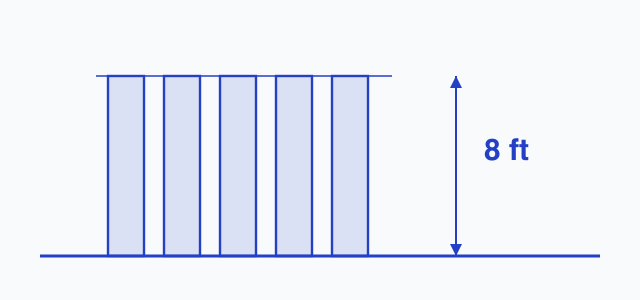
Fences under 8 feet tall with no masonry or concrete elements exceeding 6 feet do not require a building permit in Seattle. Fences over 8 feet or with concrete or masonry exceeding 6 feet require a subject-to-field-inspection construction permit from SDCI. Front and side setback height limits also apply under Seattle zoning code.
Typical threshold: fences under 8 feet with no masonry or concrete elements exceeding 6 feet do not require a permit.
Who is pulling this permit?
Apply yourself
Hire it out
Sponsored
Fence installers usually handle any required permit as part of the job. Compare a few bids before you commit.
Compare fence installer quotes on Angi
Sponsored link. PermitNotebook may earn a fee if you request quotes through it. Partners never influence our permit data.
When a permit is usually needed
Before building a fence over 8 feet or with masonry elements over 6 feet in Seattle
What a fence permit costs in Seattle
How Seattle compares in Washington
Across the Washington jurisdictions we have verified, the same threshold runs from 6 to 8, so a project that is exempt here may still need a permit one county over.
| Jurisdiction | Permit needed? | Threshold |
|---|---|---|
| Bellevue | It depends | fences over 8 feet in height require a building permit; fences 8 feet or under do not require a permit |
| Clark County | It depends | Fences seven feet or less in height do not require a permit; fences over 7 feet in height require a Fence/Retaining Wall (FRT) permit. |
| King County | It depends | fences 6 feet or less do not require a building permit in unincorporated King County; fences over 6 feet require a permit |
| Pierce County | It depends | Fences 6 feet or less in height, measured from grade, are exempt; taller fences require a building permit. |
| Seattlethis page | It depends | fences under 8 feet with no masonry or concrete elements exceeding 6 feet do not require a permit |
| Snohomish County | It depends | fences 8 feet or less in height exempt, provided they have no masonry or concrete elements above 6 feet (wire strands atop an 8-foot fence are excluded from the height measurement); taller fences, or fences with masonry/concrete above 6 feet, require a permit |
| Tacoma | It depends | fences 7 feet or under in height do not require a building permit; fences over 7 feet require a permit |
Closest fence permit thresholds outside Washington
Jurisdictions we cover whose limit sits nearest Seattle's 8 feet.
- Polk County, Florida, Solid fences over eight feet high and all masonry walls or fences with masonry pilasters require a permit; chain link fences of any height and stockade fences up to eight feet high are exempt.
- Alameda County, California, Permit exemption height limit: 7 feet for fences of light materials, 5 feet 9 inches for fences of concrete, masonry, or similar heavy materials
- Riverside County, California, Fences 7 feet or less in height are exempt from a building permit, except block walls, which are exempt only up to 4 feet in height
- Clark County, Nevada, fences over 6 feet in height require a building permit; all fences require a Fence/Wall Permit (Form BPA-005) regardless of height
How to apply in Seattle
In Seattle, most residential fences fall under the model code's 7-foot building-permit exemption, so the real approval step is a lightweight zoning or land-use permit built around a simple site plan showing the fence's location, height, and material, checked against setbacks and any corner-lot sight-triangle rule. A fence that will serve as a required swimming-pool barrier is the exception, since barrier fences carry life-safety requirements of their own.
What most fence permit applications include:
- For Seattle, a fence 7 feet or under is exempt from the model code's building permit, the same threshold the IRC uses for other small projects (IRC 2021 R105.2).
- That exemption only removes the building-code permit. It does not authorize skipping a jurisdiction's own zoning approval, which is why an exempt fence can still need its own land-use or zoning permit rather than a building permit (IRC 2021 R105.2).
- Whatever your jurisdiction calls that approval, the application centers on a basic site plan: a drawing of the property showing the fence's location, height, and material, and how it relates to the property lines (common local zoning practice).
- For Seattle, the same plan is checked against required setbacks and, on corner lots or near intersections, a sight-triangle rule that caps fence height so it does not block sightlines for drivers (common local zoning practice).
- For Seattle, a fence that will serve as a required swimming-pool barrier is handled as life-safety work rather than the light zoning process, and at least one state's adopted residential code requires a building permit for barrier fences regardless of the general fence exemption (Oregon Residential Specialty Code 2021, R101.2.2).
General submittal guidance from International Residential Code (IRC), 2021 edition, Section R105.2. Source. Seattle Department of Construction and Inspections sets the exact checklist for Seattle.
Where to apply in Seattle:
Seattle Department of Construction and Inspections
- 700 5th Ave Suite 2000, Seattle, WA 98104
- Phone: (206) 684-8600
Fence Permit in Seattle compared with nearby Washington localities
| Locality | Permit needed? | Threshold | What each Washington schedule says | Verified |
|---|---|---|---|---|
| Seattle | It depends | fences under 8 feet with no masonry or concrete elements exceeding 6 feet do not require a permit | Fences 8 feet or less with no masonry or concrete elements over 6 feet need no permit... | |
| Bellevue | It depends | fences over 8 feet in height require a building permit; fences 8 feet or under do not require a permit | No separate fence line item | |
| Clark County | It depends | Fences seven feet or less in height do not require a permit; fences over 7 feet in height require a Fence/Retaining Wall (FRT) permit. | Fees are established by county ordinance and calculated automatically during the... | |
| King County | It depends | fences 6 feet or less do not require a building permit in unincorporated King County; fences over 6 feet require a permit | Most permit fees increased approximately 14% on January 1 2026 plus a $126 application... | |
| Pierce County | It depends | Fences 6 feet or less in height, measured from grade, are exempt; taller fences require a building permit. | Building permit fee follows PCC Table 17C.10-1-B (valuation based): $69.00 for... |
Inspections and closing out your permit
In Seattle, inspection follows the permit: a fence that never needed one gets no inspection at all under the model code, and a permitted fence typically gets a single final check rather than the staged inspections used for a house. The exception is a fence serving as a swimming-pool barrier, which gets its own dedicated barrier inspection covering height, gaps, and gate hardware.
- In Seattle: inspection duty attaches only to work for which a permit is required, so a fence that qualified for the permit exemption carries no inspection obligation under the model code (IRC 2021 R109.1).
- In Seattle: where a fence permit was issued, the process skips the staged foundation, frame, and rough-in inspections used for buildings and goes straight to one final inspection once the fence is finished (IRC 2021 R109.1.6).
- In Seattle: that single check is typically a zoning compliance inspection rather than a structural review, confirming the fence matches the approved height and site plan (common local practice).
- A fence built as a swimming-pool barrier breaks that light-touch pattern in Seattle: it is separately inspected for barrier compliance, commonly required before the pool itself can be signed off (ISPSC 305; local pool-barrier inspection programs).
- In Seattle: that barrier inspection checks dimensional rules from the swimming pool and spa code rather than ordinary fence rules, including the minimum 48 inch barrier height and limits on openings and gaps a young child could pass through (ISPSC 305).
- Gate hardware is inspected too in Seattle: a self-closing, self-latching gate is part of the barrier requirement, since an unlatched gate defeats the fence's purpose as a barrier (ISPSC 305).
Schedule each inspection in advance and pass the final before you use the work or close the permit. Request inspections through the Seattle permit portal or by phone at (206) 684-8600.
Inspection sequence from International Residential Code (IRC), 2021 edition, Section R109, and ISPSC 2021 Section 305 (barriers). Source. An open permit left un-inspected can surface later in a title search or home sale.
Your Fence Permit checklist for Seattle
- Confirm the requirement. Sometimes, depending on the project. Typical threshold: fences under 8 feet with no masonry or concrete elements exceeding 6 feet do not require a permit. Usually needed: Before building a fence over 8 feet or with masonry elements over 6 feet in Seattle.
- Budget the fee. Fences 8 feet or less with no masonry or concrete elements over 6 feet need no permit per SDCI's Fences page; taller fences take a subject-to-field-inspection construction permit priced by valuation, minimum $292, plus a 5% technology fee, per the 2026 Fee Subtitle. Official fee schedule.
- Apply. In Seattle, most residential fences fall under the model code's 7-foot building-permit exemption, so the real approval step is a lightweight zoning or land-use permit built around a simple site plan showing the fence's location, height, and material, checked against setbacks and any corner-lot sight-triangle rule. A fence that will serve as a required swimming-pool barrier is the exception, since barrier fences carry life-safety requirements of their own. Start at the Seattle permit portal.
- Keep the office details handy. Seattle Department of Construction and Inspections. Phone: (206) 684-8600. Address: 700 5th Ave Suite 2000, Seattle, WA 98104.
- Plan for inspections. In Seattle, inspection follows the permit: a fence that never needed one gets no inspection at all under the model code, and a permitted fence typically gets a single final check rather than the staged inspections used for a house. The exception is a fence serving as a swimming-pool barrier, which gets its own dedicated barrier inspection covering height, gaps, and gate hardware.
Compiled from the official sources on this page. Last checked .
Permitting activity in Seattle
In 2024, Seattle authorized permits for 5,895 new residential housing units (405 single-family, 5,490 in multi-family buildings), valued at $1.2B, up from 5,299 the year before. That works out to about 7.7 permits per 1,000 residents.
Source: U.S. Census Bureau, Building Permits Survey, 2024 annual data · population 769,714.
About Seattle
Seattle has about 382,933 housing units. The median home is valued at $912,100, against a median household income of $121,984. About 44% of homes are owner-occupied, and the typical home was built around 1974.
Source: U.S. Census Bureau, American Community Survey 2023 5-year.
Frequently asked questions
- Do you need a fence permit in Seattle?
- Fences under 8 feet tall with no masonry or concrete elements exceeding 6 feet do not require a building permit in Seattle. Fences over 8 feet or with concrete or masonry exceeding 6 feet require a subject-to-field-inspection construction permit from SDCI. Front and side setback height limits also apply under Seattle zoning code. Fences under 8 feet with no masonry or concrete elements exceeding 6 feet do not require a permit. Always confirm with the office before starting.
- How much does a fence permit cost in Seattle?
- Fences 8 feet or less with no masonry or concrete elements over 6 feet need no permit per SDCI's Fences page; taller fences take a subject-to-field-inspection construction permit priced by valuation, minimum $292, plus a 5% technology fee, per the 2026 Fee Subtitle. See the official fee schedule for current amounts.
- Where do you apply for a fence permit in Seattle?
- You can apply through the Seattle permit portal or contact the Seattle Department of Construction and Inspections directly. The links are listed on this page.
- Can a homeowner pull a fence permit themselves in Seattle?
- Under Washington law (RCW 18.27.090(11), (12); RCW 19.28.261(1); RCW 18.106.150(1)): Washington lets homeowners do their own construction work, including the licensed trades, on property they own. RCW 18.27.090(12) exempts any person working on his or her own property from contractor registration, but the exemption does not apply if you do contractor type work for the purpose of selling, demolishing, or leasing the property, and the separate owner exemption in RCW 18.27.090(11) is lost if you sell or lease improved property owned less than 12 months. For electrical work, RCW 19.28.261 lets you wire your own residence, farm, or place of business without an electrician license, unless the work is on construction of a new building intended for rent, sale, or lease, or on property offered for sale within 12 months after you obtained it. RCW 18.106.150(1) gives the same kind of exemption for plumbing work at your own residence, farm, or place of business. These exemptions waive the license, not the permit: an owner doing electrical work still buys an L&I electrical work permit and passes inspection (WAC 296-46B-901), and building and plumbing permits still come from your local building department. Confirm how Seattle applies this before you apply.
From the Library
What else needs a permit in Seattle
Every other permit type we have verified for this jurisdiction, with the rule that applies here.
| Project | Permit needed? | Threshold | Typical fee |
|---|---|---|---|
| Deck Permit | It depends | decks more than 18 inches above grade require a permit; decks 18 inches or less above grade and not over a basement do not require a permit | Priced as a subject-to-field-inspection or addition/alteration construction permit by... |
| Electrical Permit | Permit required | Not specified | Itemized per Fee Subtitle Table D-15: minimum $105.12 for a standard online self-issued... |
| HVAC Permit | Permit required | Not specified | Ducted HVAC systems are priced by project valuation with a $292 minimum |
| Patio Permit | No permit needed | Not specified | No standalone patio permit |
| Plumbing Permit | Permit required | Not specified | No SDCI fee |
| Pool Permit | Permit required | Not specified | An unenclosed pool accessory to a single-family or duplex home is a flat fee of four... |
| Roof Replacement Permit | No permit needed | Not specified | One and two family homes need no permit for a straight reroof that does not change the... |
| Shed Permit | It depends | one-story detached storage sheds with a roof footprint of 120 square feet or less on a slab foundation and not in an environmentally critical area do not require a permit | Sheds of 120 square feet or less that are single story, unattached, and storage-only... |
| Solar Permit | Permit required | Not specified | Solar PV is permitted through the electrical permit: systems below 12kW are a flat $438... |
Fence Permit in other Washington localities
Everything above, sourced
Code references
National and state model-code sections the general guidance on this page is drawn from. They are not Seattle documents; the office above sets the local rules.
How this fence permit page for Seattle was verified. 2 official sources: seattle.gov, seattle.gov; fee schedule: official document. Last checked by Mario Bailey, not confirmed with Seattle Department of Construction and Inspections. Rules change; confirm before you build. How we verify.
Last checked: Report an error on this page
Compare Fence Permit requirements across Washington localities
Washington rule changes