Do you need a solar permit in North Carolina?
By Mario Bailey Last checked
In North Carolina, all 6 counties and cities we checked agree: they require a solar permit for every job.
- Always required
- 6
- of 6 jurisdictions
- Conditional
- 0
- depends on size or scope
- Not required
- 0
- exempt outright
Solar Permit rules nationwide, beyond North Carolina.
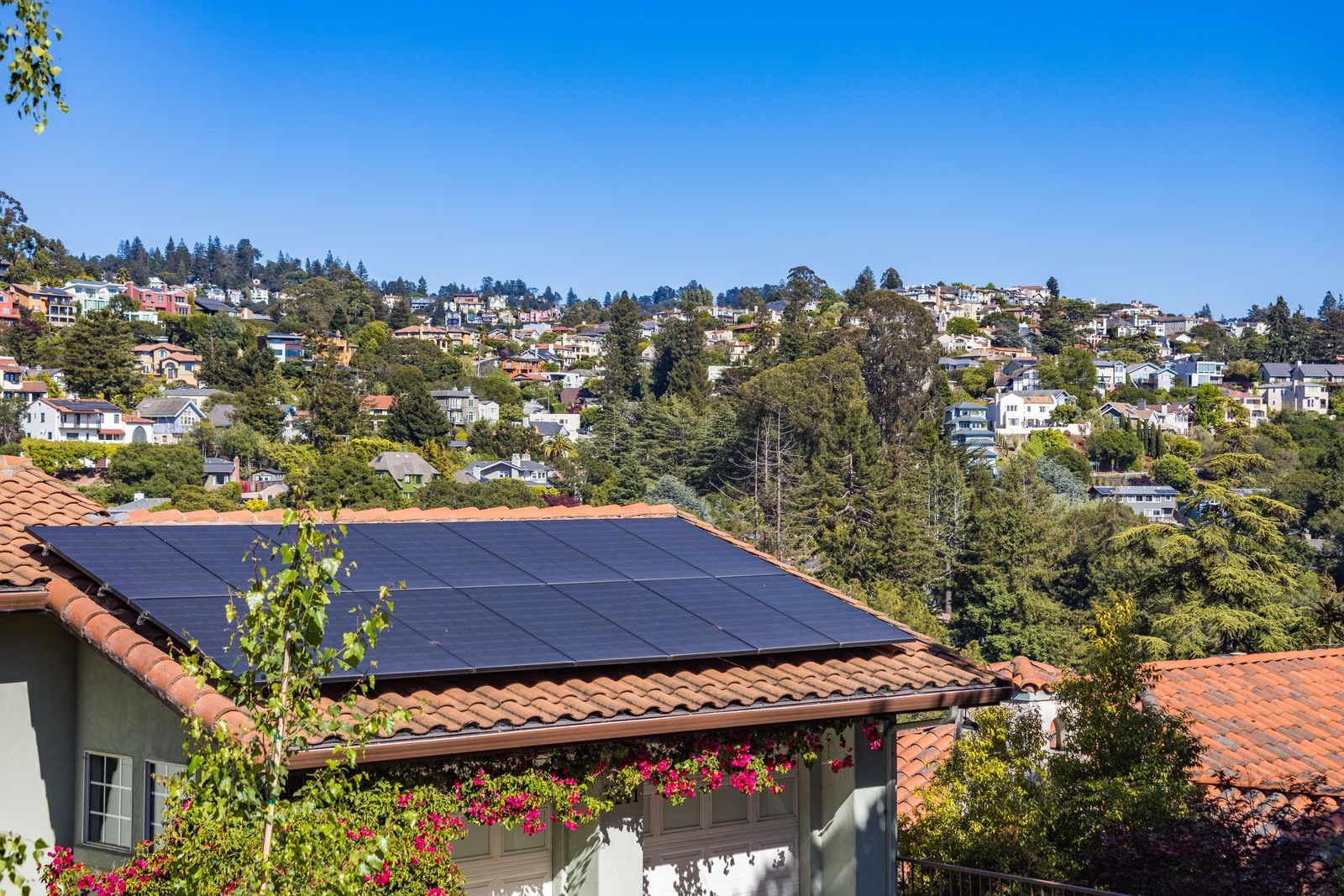
Requirements and size thresholds for solar permits vary by locality. The table below compares what each North Carolina county or city requires. Always confirm with the local office before starting.
Comparing states? See solar permit rules across every locality we cover.
The application steps and inspection sequence for solar permits come from the model code rather than from North Carolina law, so they read the same wherever you build. We keep that walkthrough in one place: how a solar permit application and its inspections work, start to finish. What changes between North Carolina jurisdictions is below: who requires a permit, what they charge, and which office you file with.
Swipe sideways to see thresholds and confidence.
| Locality | Permit required? | Typical threshold | Confidence |
|---|---|---|---|
| Charlotte | Yes | Any size | Confirmed on official page |
| Durham | Yes | Any size | From an official source |
| Greensboro | Yes | Any size | From an official source |
| Mecklenburg County | Yes | Any size | Based on building code |
| Raleigh | Yes | Any size | From an official source |
| Wake County | Yes | Any size | Confirmed on official page |
| No localities match your filter. | |||
What a solar permit costs in North Carolina
6 North Carolina jurisdictions we cover publish a fee figure for this work. Each line is quoted from that office's own schedule and linked to its citation. The figures are not comparable to one another: some are flat minimums, some a percentage of job value, some charged per fixture, so what you pay depends on which schedule applies and on your job's valuation.
Solar has no dedicated line item. The permit is charged off total construction permit value under the LUESA Fee Ordinance (revised July 1, 2026), where $3,001 to $50,000 is '$59.70 plus $12.19 per $1,000 or part over $3,000' and $50,001 to $100,000 is '$632.57 plus $5.49 per $1,000 or part over $50,000', plus a $3.00 technology charge on all permits. A ground-mounted or pole-mounted array that needs the City of Charlotte LDIRL pays $70 Residential Zoning under the FY 2025 Individual Residential Lot Fee Schedule, effective for projects submitted July 1, 2024 to June 30, 2025, plus any Urban Forestry tree preservation tier of $75, $225 or $375.
last checked
Electrical Permit Fee Schedule (Effective 7/1/18, Includes Technology Surcharge), Schedule G "Miscellaneous": "Solar panel inspections" "Residential" $100.00. The solar handout also points to Building Permit Fee Schedule G, whose "Solar Photovoltaic Power Systems Permit" line is $65.00 with a $70.00 review fee, listed under Fire Prevention Construction Permits.
last checked
Building Permit Fee Schedule, Document #1005 dated 12/19/24: 'Minimum permit fee - $85'. The residential Alt/Add column charges the $85.00 minimum on construction values up to $11,000 and rises above that ($88.00 at $12,000, $127.00 at $25,000, $302.00 at $100,000, then '$100,000 - 500,000 = $302.00 PLUS $2.00 PER $1,000'). 'STATE LICENSED CONTRACTORS: Add $10.00 to all Residential Permits'. 'DOUBLE PERMIT FEE: BUILDING PERMIT FEES WILL BE DOUBLED IF WORK IS BEGUN BEFORE SECURING A PERMIT'. The department page adds that 'The minimum permit fee for building, electrical, mechanical, and plumbing permits has increased from $75 to $85.' The Electrical Permit Fee Schedule, Document #4100 dated 7/16/24, has no solar line item; it prices the work through 'Minimum Permit Fee 85.00', 'Panel 10.00 ea.' and the amp-rated service lines ('200 Amp. Service 99.00 ea.').
last checked
Photovoltaic installs bill as an electrical trade permit priced off total construction value with a $59.70 minimum for projects not requiring plan review plus $12.19 per $1,000 over $3,000 and a $3 technology charge per permit, per the LUESA Fee Ordinance revised July 1 2026
last checked
The FY27 Development Fee Guide (applications submitted July 1, 2026 through June 30, 2027) lists only "Photovoltaic (Solar) - Commercial" at $543.00 per permit; no residential solar line is enumerated. FY27 Development Fee Guide (applications submitted July 1, 2026 through June 30, 2027), Building and Safety: "Minimum Trade Permit Fee" of $124.00 per trade ("Any fee not specifically listed as an individual fee will be charged at the minimum permit fee."); the guide's appendix adds the 4% technology surcharge for a total of $129.00.
last checked
Solar panels are named in the Residential Additions, Alterations, Accessory Building & Structures line: 'This fee includes permits for additions, alterations, repairs, sheds, attached/detached garages, retaining walls, porches, decks, solar panels, closed crawlspaces, etc.' The fee is 'Residential Permit Fee $75 plus $0.25 per square foot of gross floor area.'
last checked
Jurisdictions not listed publish no dollar figure we could quote. Absence does not mean a permit is free.
Common questions about solar permits in North Carolina
- Do I need a solar permit in North Carolina?
- In most of North Carolina, yes. Permits are issued locally, so the answer comes from your North Carolina city or county rather than a single statewide rule. Of the 6 North Carolina jurisdictions we have verified for solar work, 6 require a permit outright, 0 depend on the size or scope of the job, and 0 require none.
Ready to move on your solar permit?
Hire it out
Before you sign, ask the contractor:
- Who pulls the permit, you or me, and is the permit fee included in the bid?
- Which inspections will this job need, and who meets the inspector on site?
- Is your North Carolina Licensing Board for General Contractors (NCLBGC) license active, and under which business name? Verify it on portal.nclbgc.org.
North Carolina's owner-builder rule (N.C. Gen. Stat. 87-1(a), 87-1(b)(2), 87-14(a)(1), 160D-1113, 160D-1115) sets what you may do on your own home without hiring anyone. Read the statute.