Pool Permit in Chicago, Illinois
It depends
Sometimes, depending on the project
Before constructing any residential swimming pool with water depth exceeding 48 inches
Issued byChicago Department of Buildings
By Mario Bailey, verified against official sources
- Median to issue
- 57 days
- 5,329 records
- Typical job value
- $118,600
- declared valuation
Quick answer
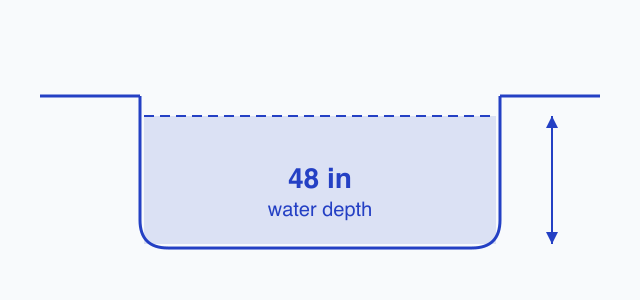
Chicago defines a private residential swimming pool as one with water depth greater than 48 inches on a lot with 1 to 3 residential units. Pools meeting that definition require a full building permit with plans by a licensed architect or structural engineer. Shallow above-ground pools not exceeding 48 inches of water depth and 5000 gallons in volume may not require a permit.
Typical threshold: pools with water depth greater than 48 inches on a lot with 1 to 3 residential units require a full building permit with licensed architect or engineer plans; shallower pools with volume under 5000 gallons may be exempt.
Who is pulling this permit?
Apply yourself
Hire it out
Sponsored
Pool builders handle the permit and its safety requirements as part of the job. Comparing a few bids before you sign is the useful next step.
Compare pool builder quotes on Angi
Sponsored link. PermitNotebook may earn a fee if you request quotes through it. Partners never influence our permit data.
When a permit is usually needed
Before constructing any residential swimming pool with water depth exceeding 48 inches
What a pool permit costs in Chicago
How Chicago compares in Illinois
Closest pool permit thresholds outside Illinois
Jurisdictions we cover whose limit sits nearest Chicago's 48 in.
- Austin, Texas, prefabricated pools less than 24 inches deep are exempt; all other residential pools require a permit
- Jersey City, New Jersey, permit required for all pools that can hold more than 24 inches of water
- Philadelphia, Pennsylvania, prefabricated swimming pools or spas less than 24 inches deep AND less than 5000 gallons do not require a permit; all larger pools require a permit
- Chandler, Arizona, A prefabricated swimming pool less than 18 inches deep is exempt from a building permit; any pool or spa (in-ground or prefabricated) 18 inches deep or greater requires a permit, and a compliant safety barrier is required regardless of depth once a permit-triggering pool exists.
How to apply in Chicago
In Chicago, a residential pool permit application covers both construction and safety: a scaled site plan, structural plans for the pool, a barrier plan showing how the pool will be enclosed, and an electrical plan covering bonding and the equipment disconnect.
What most pool permit applications include:
- Pool and spa design and construction fall under the residential code chapter that folds in the swimming pool and spa code, and permit review checks plans against that chapter (IRC R326).
- For Chicago, the site plan must show pool equipment such as pumps, filters, and heaters set back at least 36 inches from the outside of the required barrier (ISPSC 305.2.9).
- For an in-ground pool, engineered structural plans covering the shell and reinforcing steel, with the responsible structural engineer's license information, are a standard part of the submittal (per official pool submittal checklists).
- For Chicago, a barrier plan identifying the fence, pool structure, or dwelling wall that will enclose the pool must be submitted and must comply with the code's barrier chapter (ISPSC 305).
- Electrical plans must show the pool's equipotential bonding design, since the shell, perimeter surfaces, and metal fittings within 5 feet of the water must all tie into a common bonding grid (NEC 680.26).
- For Chicago, the electrical plan must also show a disconnecting means for the pool equipment that is readily accessible and within sight of the equipment (NEC 680.13).
General submittal guidance from 2021 IRC R326 (adopting the ISPSC), ISPSC 2021 Section 305, and NEC 2020 Article 680. Source. Chicago Department of Buildings sets the exact checklist for Chicago.
Where to apply in Chicago:
Chicago Department of Buildings
- 121 N. LaSalle St., 9th Floor, Chicago, IL 60602
- Email: dob-info@cityofchicago.org
Pool Permit in Chicago compared with nearby Illinois localities
| Locality | Permit needed? | Threshold | What each Illinois schedule says | Verified |
|---|---|---|---|---|
| Chicago | It depends | pools with water depth greater than 48 inches on a lot with 1 to 3 residential units require a full building permit with licensed architect or engineer plans; shallower pools with volume under 5000 gallons may be exempt | Flat $400 to install a private in-ground or fixed pool or hot tub per Table... | |
| Cook County | It depends | prefabricated above-ground pools accessory to detached single-family dwellings | Cook County Code of Ordinances Sec. |
Inspections and closing out your permit
In Chicago, pool inspections track the concrete pour: the steel and bonding grid are checked before gunite or shotcrete goes in, bonding is checked again before decking is poured, and the permanent barrier and remaining electrical work are checked at final before the pool can be filled and used.
- In Chicago: before gunite or shotcrete is sprayed, the inspector checks the rebar against the engineered plans and confirms the equipotential bonding wire is stubbed out and tied into the steel, since it will be buried in concrete afterward (NEC 680.26).
- In Chicago: a bonding inspection separately confirms coping, decking, ladders, handrail cups, and any other metal within 5 feet of the water are tied to the bonding grid, and it must pass before coping is installed (NEC 680.26).
- In Chicago: a temporary barrier at least 4 feet high must enclose the site from the moment excavation starts until the permanent barrier is finished, and inspectors check for it throughout construction (ISPSC 305.1.1).
- In Chicago: a pre-plaster inspection confirms the circulation equipment's electrical work is installed and all bonding is complete before the pool's interior finish goes on (NEC 680.26).
- In Chicago: at final inspection the permanent barrier is checked against the code's requirements and the equipment and cover-mechanism bonding must be complete before the pool can be filled and used (ISPSC 305, NEC 680.26).
Schedule each inspection in advance and pass the final before you use the work or close the permit. Request inspections through the Chicago permit portal.
Inspection sequence from NEC 2020 Article 680.26 (equipotential bonding) and ISPSC 2021 Section 305 (barriers). Source. An open permit left un-inspected can surface later in a title search or home sale.
Your Pool Permit checklist for Chicago
- Confirm the requirement. Sometimes, depending on the project. Typical threshold: pools with water depth greater than 48 inches on a lot with 1 to 3 residential units require a full building permit with licensed architect or engineer plans; shallower pools with volume under 5000 gallons may be exempt. Usually needed: Before constructing any residential swimming pool with water depth exceeding 48 inches.
- Budget the fee. Flat $400 to install a private in-ground or fixed pool or hot tub per Table 14A-12-1204.2, electrical work permitted separately; pools 48 inches or shallower holding 5,000 gallons or less at buildings of 3 units or fewer need no permit. Official fee schedule.
- Apply. In Chicago, a residential pool permit application covers both construction and safety: a scaled site plan, structural plans for the pool, a barrier plan showing how the pool will be enclosed, and an electrical plan covering bonding and the equipment disconnect. Start at the Chicago permit portal.
- Keep the office details handy. Chicago Department of Buildings. Address: 121 N. LaSalle St., 9th Floor, Chicago, IL 60602.
- Plan for inspections. In Chicago, pool inspections track the concrete pour: the steel and bonding grid are checked before gunite or shotcrete goes in, bonding is checked again before decking is poured, and the permanent barrier and remaining electrical work are checked at final before the pool can be filled and used.
Compiled from the official sources on this page. Last checked .
Permitting activity in Chicago
In 2024, Chicago authorized permits for 4,371 new residential housing units (325 single-family, 4,046 in multi-family buildings), valued at $1.1B, up from 3,616 the year before. That works out to about 1.6 permits per 1,000 residents.
Source: U.S. Census Bureau, Building Permits Survey, 2024 annual data · population 2,677,643.
About Chicago
Chicago has about 1,268,199 housing units. The median home is valued at $315,200, against a median household income of $75,134. About 46% of homes are owner-occupied, and the typical home was built around 1952.
Source: U.S. Census Bureau, American Community Survey 2023 5-year.
Frequently asked questions
- Do you need a pool permit in Chicago?
- Chicago defines a private residential swimming pool as one with water depth greater than 48 inches on a lot with 1 to 3 residential units. Pools meeting that definition require a full building permit with plans by a licensed architect or structural engineer. Shallow above-ground pools not exceeding 48 inches of water depth and 5000 gallons in volume may not require a permit. Pools with water depth greater than 48 inches on a lot with 1 to 3 residential units require a full building permit with licensed architect or engineer plans; shallower pools with volume under 5000 gallons may be exempt. Always confirm with the office before starting.
- How much does a pool permit cost in Chicago?
- Flat $400 to install a private in-ground or fixed pool or hot tub per Table 14A-12-1204.2, electrical work permitted separately; pools 48 inches or shallower holding 5,000 gallons or less at buildings of 3 units or fewer need no permit. See the official fee schedule for current amounts.
- How long does a pool permit take in Chicago?
- Across 5,329 recent residential permit records in Chicago, the median time to issue was 57 days. Individual projects vary with scope and office workload, so confirm with the office.
- Where do you apply for a pool permit in Chicago?
- You can apply through the Chicago permit portal or contact the Chicago Department of Buildings directly. The links are listed on this page.
- Can a homeowner pull a pool permit themselves in Chicago?
- Under Illinois law (225 ILCS 320/3): Whether an owner can pull a building permit is a municipal question in Illinois; there is no state building-permit statute. At the state level, the Plumbing License Law requires that 'all plumbing shall be performed only by plumbers licensed under the provisions of this Act,' but exempts owner-occupants (and lessee-occupants) of single-family residences doing their own plumbing, provided the work meets Illinois State Plumbing Code minimum standards, is submitted for inspection by the Department or local unit, uses no unlicensed helpers ('shall not employ other than a plumber licensed pursuant to this Act to assist'), and the occupant has 'a current intention to live in such premises as his or her bona fide sole and exclusive residence for a period of not less than 6 months after the completion of the plumbing work.' Confirm how Chicago applies this before you apply.
How the 57 days break down
Application filed
Submitted through the permit portal, with the fee due at submission.
Review
A correction request restarts this leg, which is the single largest reason a permit takes longer than the median.
Permit issued
Median across 5,329residential permit records in the last 12 months. Half were faster, half slower.
Inspections
The sequence in the checklist above. Work that is covered up before its inspection generally has to be reopened.
From the Library
What else needs a permit in Chicago
Every other permit type we have verified for this jurisdiction, with the rule that applies here.
| Project | Permit needed? | Threshold | Typical fee |
|---|---|---|---|
| Bathroom Remodel Permit | It depends | Not specified | Nonstructural interior remodel up to 500 sq ft with no occupancy or load-bearing change... |
| Deck Permit | Permit required | Not specified | Installation or alteration of a deck is $250 per dwelling unit served under the 2026... |
| Electrical Permit | Permit required | Not specified | Tiered stand-alone schedule: repair or alteration of devices on existing circuits is $75... |
| EV Charger Permit | It depends | Not specified | Not published |
| Fence Permit | It depends | fence 5 ft or less in height on private residential property does not require a permit; fences over 5 ft require a permit | Flat $150 for a nonmasonry fence up to 6 ft high per Table 14A-12-1204.2 |
| HVAC Permit | Permit required | Not specified | No permit to repair or in-kind replace a furnace, boiler or AC in a residential building... |
| Patio Permit | It depends | at-grade noncombustible (concrete or brick) patios not more than 30 inches above adjacent grade, not over a basement or story below, and not in the public way are exempt; taller, over-basement, public-way, or roofed/covered patios require a permit | Not published |
| Plumbing Permit | Permit required | Not specified | Repair or in-kind fixture replacement without altering in-wall plumbing is $75 per... |
| Roof Replacement Permit | Permit required | Not specified | No permit to repair, recover or replace a pitched roof of at least 2:12 slope on a... |
| Shed Permit | It depends | single-story detached tool or storage shed under 150 sq ft and not more than 15 ft tall with no plumbing does not require a permit | A single-story shed 150 sq ft or less, up to 15 ft tall with no plumbing needs no permit... |
| Solar Permit | Permit required | Not specified | Flat $225 for a rooftop solar PV system under 13.44 kW per Table 14A-12-1204.2, plus a... |
| Water Heater Permit | It depends | Not specified | No permit to repair or in-kind replace a water heater in a residential building up to 4... |
Pool Permit in other Illinois localities
Everything above, sourced
Code references
National and state model-code sections the general guidance on this page is drawn from. They are not Chicago documents; the office above sets the local rules.
How this pool permit page for Chicago was verified. 2 official sources: chicago.gov, chicago.gov; fee schedule: official document. Last checked by Mario Bailey, not confirmed with Chicago Department of Buildings. Rules change; confirm before you build. How we verify.
Last checked: Report an error on this page