Shed Permit in Pittsburgh, Pennsylvania
It depends
Sometimes, depending on the project
Before building or placing a detached shed larger than 200 square feet, or any shed that is more than one story, on a single-family or two-family property.
Issued byCity of Pittsburgh Department of Permits, Licenses and Inspections (PLI)
By Mario Bailey, verified against official sources
Quick answer
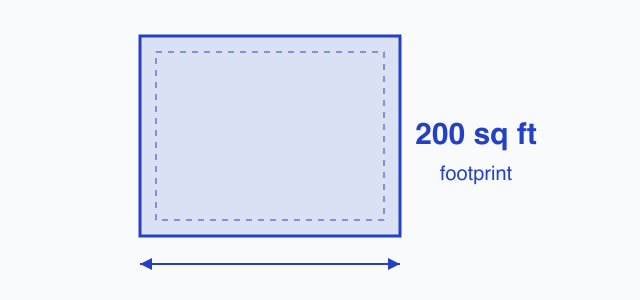
A one-story detached shed, playhouse or similar accessory structure of 200 square feet or less that serves a single-family or two-family dwelling is exempt from both PLI and Zoning regulation, so no Building and Development Application is filed at all. Anything larger, or more than one story, needs a Building and Development Application through OneStopPGH. The exemption removes the application, not the code: the city states that exempt work still has to comply with the Zoning Code, and City Planning warns that setbacks still apply to sheds based on zoning district.
Typical threshold: floor area of a one-story detached accessory structure accessory to a single-family or two-family dwelling.
Who is pulling this permit?
Apply yourself
Hire it out
Sponsored
If a contractor builds or places your shed, they usually handle any required permit. Compare a few bids before you commit.
Compare contractor quotes on Angi
Sponsored link. PermitNotebook may earn a fee if you request quotes through it. Partners never influence our permit data.
When a permit is usually needed
Before building or placing a detached shed larger than 200 square feet, or any shed that is more than one story, on a single-family or two-family property.
What a shed permit costs in Pittsburgh
How Pittsburgh compares in Pennsylvania
Closest shed permit thresholds outside Pennsylvania
Jurisdictions we cover whose limit sits nearest Pittsburgh's 200 sq ft.
- Austin, Texas, one-story detached accessory structures used as tool or storage sheds with floor area no greater than 200 sq ft and no more than 15 ft in height and no plumbing and not in a floodplain are exempt
- Baton Rouge, Louisiana, floor area of a detached accessory structure
- Bellevue, Washington, detached storage sheds playhouses or gazebos with a floor area of 200 square feet or less do not require a building permit; structures over 200 square feet require a permit
- Boise, Idaho, floor area of a one-story detached accessory structure
How to apply in Pittsburgh
In Pittsburgh, a residential shed permit application, once the shed is large enough to require one, is a set of construction documents that show what will be built and prove it meets the adopted residential code. In practice that means a written permit application, a scaled site plan locating the shed and its distances to the property lines, and construction documents covering the shed's foundation or anchoring system and its framing.
What most shed permit applications include:
- For Pittsburgh, a written permit application identifying the proposed work and describing the property by its address or legal description, filed with the building department before construction begins (IRC R105.3).
- For Pittsburgh, a scaled site plan showing the shed's size and location and its dimensioned distances to all property lines so required setbacks can be verified before the permit is issued (IRC R106.2).
- Construction documents showing the shed's foundation: freestanding accessory structures at or under the code's small-structure size and eave-height limits (600 square feet and a 10 foot eave height in the model code) are exempt from continuous footings but must still be shown supported on undisturbed soil or engineered fill and anchored to resist wind-induced uplift and overturning (IRC R403.1).
- Where the shed does sit on a continuous foundation with a wood sill plate, anchor bolt or approved strap details tying the sill plate to the foundation (IRC R403.1.6).
- Roof framing details showing the rafter-to-wall or truss-to-wall connections, since even a shed exempt from continuous footings must be anchored to resist wind-induced uplift and overturning (IRC R403.1; R802.11).
General submittal guidance from IRC R105.3 (permit application), R106.2 (site plan), R403.1 (footings and anchorage for accessory structures), and R403.1.6 (sill anchorage), 2021 IRC. Source. City of Pittsburgh Department of Permits, Licenses and Inspections (PLI) sets the exact checklist for Pittsburgh.
Where to apply in Pittsburgh:
City of Pittsburgh Department of Permits, Licenses and Inspections (PLI)
- OneStopPGH Counter, 412 Boulevard of the Allies, Pittsburgh, PA 15219
- Phone: 412-255-2175
- Email: pliapptech@pittsburghpa.gov
Shed Permit in Pittsburgh compared with nearby Pennsylvania localities
| Locality | Permit needed? | Threshold | What each Pennsylvania schedule says | Verified |
|---|---|---|---|---|
| Pittsburgh | It depends | floor area of a one-story detached accessory structure accessory to a single-family or two-family dwelling | 2026 PLI Fee Schedule, effective 1/1/2026: "Base Permit Fee (Residential) $6.00 per... | |
| Philadelphia | It depends | detached structures under 200 sq ft for one-or-two-family dwellings do not require a permit | Sheds 120 sq ft or less in the rear yard need no permit |
Inspections and closing out your permit
In Pittsburgh, a permitted shed is inspected in stages as it goes up: the foundation or the anchors that hold it down before they are covered, the framing before it is enclosed, and a final inspection once the shed is finished. Each stage checks the items that would be hidden or unsafe if skipped.
- Foundation or anchor inspection in Pittsburgh: called after any required footings, piers, or ground anchors are set and any forms or reinforcing steel are in place, but before concrete is placed, so the foundation or anchoring system can be verified before it is covered (IRC R109.1.1).
- Frame inspection in Pittsburgh: after the shed is framed, sheathed, and braced, the inspector checks the framing, bracing, fasteners, and the roof connections that resist wind uplift, before those elements are covered (IRC R109.1.4 frame inspection; R403.1 anchorage).
- Final inspection in Pittsburgh: made after the permitted work is complete and before the shed is used; work may not proceed past any inspection stage without the building official's approval (IRC R109.1.6 final inspection; R109.4 approval required).
- In Pittsburgh: for a pre-fabricated or kit shed, the manufacturer's installation instructions must be on site at the time of inspection so the inspector can confirm the anchoring and assembly match the design (IRC R106.1.2).
Schedule each inspection in advance and pass the final before you use the work or close the permit. Request inspections through the Pittsburgh permit portal or by phone at 412-255-2175.
Inspection sequence from IRC R109.1.1 (foundation inspection), R109.1.4 (frame inspection), R109.1.6 (final inspection), and R106.1.2 (manufacturer's instructions on site), 2021 IRC. Source. An open permit left un-inspected can surface later in a title search or home sale.
Your Shed Permit checklist for Pittsburgh
- Confirm the requirement. Sometimes, depending on the project. Typical threshold: floor area of a one-story detached accessory structure accessory to a single-family or two-family dwelling. Usually needed: Before building or placing a detached shed larger than 200 square feet, or any shed that is more than one story, on a single-family or two-family property.
- Budget the fee. 2026 PLI Fee Schedule, effective 1/1/2026: "Base Permit Fee (Residential) $6.00 per $1,000 of Construction Value (Minimum: $130 - Maximum: $8,000)", with 40% of the base fee non-refundable and due at application and the remainder due at issuance. Add a $4.50 State Education and Training Fund fee, a $5.00 Digital Record Retention Fee, and a technology fee of $2.00 to $25.00 by base fee range. Zoning review adds "Residential Zoning Review $1.00/$1000 of project cost (min. $50.00, max $40,000.00)". Official fee schedule.
- Apply. In Pittsburgh, a residential shed permit application, once the shed is large enough to require one, is a set of construction documents that show what will be built and prove it meets the adopted residential code. In practice that means a written permit application, a scaled site plan locating the shed and its distances to the property lines, and construction documents covering the shed's foundation or anchoring system and its framing. Start at the Pittsburgh permit portal.
- Keep the office details handy. City of Pittsburgh Department of Permits, Licenses and Inspections (PLI). Phone: 412-255-2175. Address: OneStopPGH Counter, 412 Boulevard of the Allies, Pittsburgh, PA 15219.
- Plan for inspections. In Pittsburgh, a permitted shed is inspected in stages as it goes up: the foundation or the anchors that hold it down before they are covered, the framing before it is enclosed, and a final inspection once the shed is finished. Each stage checks the items that would be hidden or unsafe if skipped.
Compiled from the official sources on this page. Last checked .
Frequently asked questions
- Do you need a shed permit in Pittsburgh?
- A one-story detached shed, playhouse or similar accessory structure of 200 square feet or less that serves a single-family or two-family dwelling is exempt from both PLI and Zoning regulation, so no Building and Development Application is filed at all. Anything larger, or more than one story, needs a Building and Development Application through OneStopPGH. The exemption removes the application, not the code: the city states that exempt work still has to comply with the Zoning Code, and City Planning warns that setbacks still apply to sheds based on zoning district. Floor area of a one-story detached accessory structure accessory to a single-family or two-family dwelling. Always confirm with the office before starting.
- How much does a shed permit cost in Pittsburgh?
- 2026 PLI Fee Schedule, effective 1/1/2026: "Base Permit Fee (Residential) $6.00 per $1,000 of Construction Value (Minimum: $130 - Maximum: $8,000)", with 40% of the base fee non-refundable and due at application and the remainder due at issuance. Add a $4.50 State Education and Training Fund fee, a $5.00 Digital Record Retention Fee, and a technology fee of $2.00 to $25.00 by base fee range. Zoning review adds "Residential Zoning Review $1.00/$1000 of project cost (min. $50.00, max $40,000.00)". See the official fee schedule for current amounts.
- How long does a shed permit take in Pittsburgh?
- In Pittsburgh, a shed permit typically takes 15 business days for initial review of a residential Building and Development Application, 8 business days for a revision or amendment. Times can vary by workload and project scope, so confirm with the office.
- Where do you apply for a shed permit in Pittsburgh?
- You can apply through the Pittsburgh permit portal or contact the City of Pittsburgh Department of Permits, Licenses and Inspections (PLI) directly. The links are listed on this page.
- Can a homeowner pull a shed permit themselves in Pittsburgh?
- Under Pennsylvania law (34 Pa. Code 403.62(a); Act 132 of 2008 (HICPA), Section 2 (73 P.S. 517.2)): Yes. 34 Pa. Code 403.62(a) provides that 'An owner or authorized agent who intends to construct, enlarge, alter, repair, move, demolish or change the occupancy of a residential building or erect, install, enlarge, alter, repair, remove, convert or replace an electrical, gas, mechanical or plumbing system regulated by the Uniform Construction Code shall first apply to the building code official and obtain the required permit.' The owner is a permitted applicant. The Home Improvement Consumer Protection Act (Act 132 of 2008, 73 P.S. 517.1 et seq.) is a registration and consumer-protection law for contractors. Section 2 excludes two categories relevant to a homeowner: '(1) A person for whom the total cash value of all of that person's home improvements is less than $5,000 during the previous taxable year' from its 'Contractor' definition, and '(v) Any work performed without compensation by the owner of the owner's private residence or residential rental property' from its 'home improvement' definition. Pennsylvania has no statewide trade licensing barring homeowner work; trade licensing, where it exists, is municipal. Confirm how Pittsburgh applies this before you apply.
From the Library
What else needs a permit in Pittsburgh
Every other permit type we have verified for this jurisdiction, with the rule that applies here.
| Project | Permit needed? | Threshold | Typical fee |
|---|---|---|---|
| Deck Permit | Permit required | Any size | 2026 PLI Fee Schedule, effective 1/1/2026: "Base Permit Fee (Residential) $6.00 per... |
| Electrical Permit | It depends | Before installing a new electrical system, extending or modifying an existing one, or... | 2026 PLI Fee Schedule, effective 1/1/2026: "Base Permit Fee (Residential) $6.00 per... |
| Fence Permit | Permit required | Any size | ...only pays the Department of City Planning fee, "Residential Zoning Review... |
| HVAC Permit | It depends | Before installing, replacing, extending or modifying a furnace, air conditioner, heat... | 2026 PLI Fee Schedule, effective 1/1/2026: "Base Permit Fee (Residential) $6.00 per... |
| Plumbing Permit | Permit required | Any size | 1, 2023: Level 1 Plans (0-5 fixtures) $80.00, Level 2 Plans (6-50 fixtures) $117.00... |
| Pool Permit | It depends | prefabricated pools accessory to a single-family or two-family dwelling that also hold no more than 5,000 gallons and are installed entirely above grade | 2026 PLI Fee Schedule, effective 1/1/2026: "Base Permit Fee (Residential) $6.00 per... |
| Roof Replacement Permit | Permit required | Any size | 2026 PLI Fee Schedule, effective 1/1/2026: "Base Permit Fee (Residential) $6.00 per... |
| Solar Permit | Permit required | Any size | 2026 PLI Fee Schedule, effective 1/1/2026: "Base Permit Fee (Residential) $6.00 per... |
Shed Permit in other Pennsylvania localities
Everything above, sourced
Code references
National and state model-code sections the general guidance on this page is drawn from. They are not Pittsburgh documents; the office above sets the local rules.
- IRC R105.3 (permit application), R106.2 (site plan), R403.1 (footings and anchorage for accessory structures), and R403.1.6 (sill anchorage), 2021 IRC
- IRC R109.1.1 (foundation inspection), R109.1.4 (frame inspection), R109.1.6 (final inspection), and R106.1.2 (manufacturer's instructions on site), 2021 IRC
How this shed permit page for Pittsburgh was verified. 2 official sources: pittsburghpa.gov, pittsburghpa.gov; fee schedule: official document. Last checked by Mario Bailey, not confirmed with City of Pittsburgh Department of Permits, Licenses and Inspections (PLI). Rules change; confirm before you build. How we verify.
Last checked: Report an error on this page
Compare Shed Permit requirements across Pennsylvania localities