Do you need a roof replacement permit in Virginia?
By Mario Bailey Last checked
- Always required
- 1
- of 12 jurisdictions
- Conditional
- 11
- depends on size or scope
- Not required
- 0
- exempt outright
Roof Replacement Permit rules nationwide, beyond Virginia.
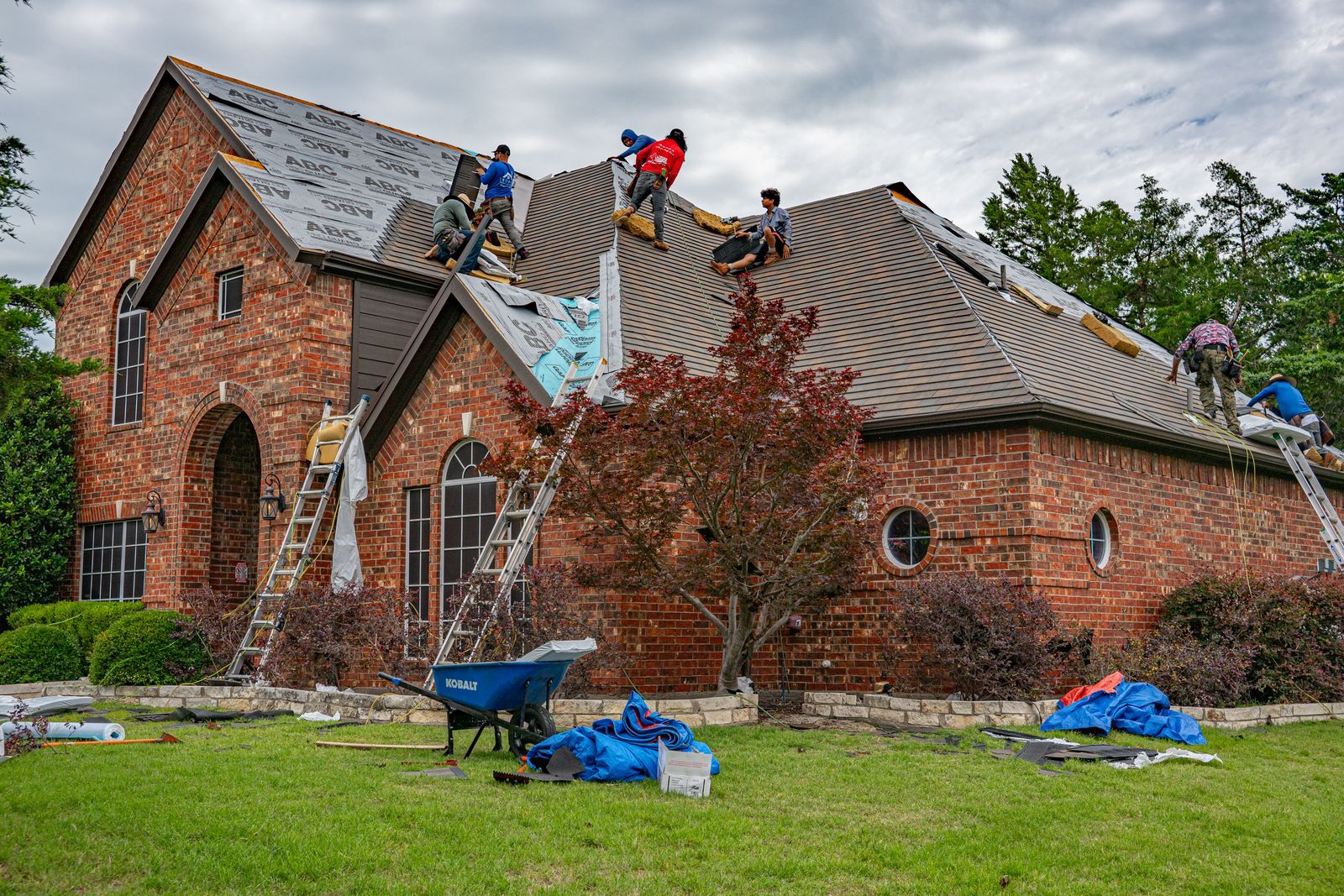
Requirements and size thresholds for roof replacement permits vary by locality. The table below compares what each Virginia county or city requires. Always confirm with the local office before starting.
Comparing states? See roof replacement permit rules across every locality we cover.
What to know about roof replacement permits in Virginia
Roof replacement permit rules in Virginia depend on the scope of work. Simple shingle replacement is often exempt under state code, while structural or sheathing work usually needs a permit. Costs depend on roof size and materials, and a licensed roofing contractor helps ensure the work passes any required inspection.
The application steps and inspection sequence for roof replacement permits come from the model code rather than from Virginia law, so they read the same wherever you build. We keep that walkthrough in one place: how a roof replacement permit application and its inspections work, start to finish. What changes between Virginia jurisdictions is below: who requires a permit, what they charge, and which office you file with.
Swipe sideways to see thresholds and confidence.
| Locality | Permit required? | Typical threshold | Confidence |
|---|---|---|---|
| Arlington County | Conditional | Replacing roof covering alone or with less than 256 square feet of roof decking replaced needs no permit; replacing more than 256 square feet of decking requires a building permit, and decking originally required to be fire retardant treated always requires a permit. | Confirmed on official page |
| Chesterfield County | Conditional | like-for-like replacement of roof covering on one- and two-family homes is exempt statewide in areas with nominal design wind speed of 100 mph or less; a permit is required when roof sheathing or framing is replaced, and may be required in historic districts or flood hazard areas | Confirmed on official page |
| Culpeper County | Conditional | Not specified | Based on building code |
| Fairfax County | Conditional | replacing 256 sq ft or more of roof plywood (decking) requires a permit; shingle-only replacement and under 256 sq ft plywood replacement are exempt | Confirmed on official page |
| Fauquier County | Conditional | like-for-like replacement of roof covering on one- and two-family homes is exempt statewide in areas with nominal design wind speed of 100 mph or less; a permit is required when roof sheathing or framing is replaced, and may be required in historic districts or flood hazard areas | Confirmed on official page |
| Henrico County | Conditional | like-for-like replacement of roof covering on one- and two-family homes is exempt in areas with nominal design wind speed of 100 mph or less; a permit is required when more than 256 sq ft of roof sheathing (decking) is repaired or replaced and may be required in historic districts or flood hazard areas | Confirmed on official page |
| Loudoun County | Conditional | permit required if replacing more than 256 sq ft of roof decking or making structural changes or changing roofing materials | Based on building code |
| Orange County | Conditional | like-for-like replacement of roof covering on one- and two-family homes is exempt statewide in areas with nominal design wind speed of 100 mph or less; a permit is required when roof sheathing or framing is replaced, and may be required in historic districts or flood hazard areas | Confirmed on official page |
| Prince William County | Conditional | building permit required for replacement of more than 256 sq ft of roof decking; standard shingle re-roofing is exempt | Confirmed on official page |
| Spotsylvania County | Conditional | like-for-like replacement of roof covering on one- and two-family homes is exempt statewide in areas with nominal design wind speed of 100 mph or less; a permit is required when roof sheathing or framing is replaced, and may be required in historic districts or flood hazard areas | Confirmed on official page |
| Stafford County | Conditional | like-for-like replacement of roof covering on one- and two-family homes is exempt statewide in areas with nominal design wind speed of 100 mph or less; a permit is required when roof sheathing or framing is replaced, and may be required in historic districts or flood hazard areas | Confirmed on official page |
| Virginia Beach | Yes | Roofing replacement is on the city's permit-required alterations list; the state exemption for roof covering replacement on one and two family dwellings applies only where the nominal design wind speed is not greater than 100 mph. | Confirmed on official page |
| No localities match your filter. | |||
What a roof replacement permit costs in Virginia
9 Virginia jurisdictions we cover publish a fee figure for this work. Each line is quoted from that office's own schedule and linked to its citation. The figures are not comparable to one another: some are flat minimums, some a percentage of job value, some charged per fixture, so what you pay depends on which schedule applies and on your job's valuation.
No permit or fee for ordinary reroofing or shingle replacement, which the county lists among ordinary repairs; storm damage repair or exterior renovation has its own $57 line, per the residential fee schedule effective 7/1/2025
last checked
Residential roof repairs and new roof structures are billed at 3 percent of the estimated cost of construction with the $141.75 base fee as the floor; simple shingle-only replacement needs no permit per county guidance, per Appendix Q effective 2026-07-01
last checked
Roofing or siding only work with no other proposed work is a flat $100 plus the 10% technology surcharge, per the county fee schedule effective 7/1/2025
last checked
Roof covering replacement is exempt in unlimited amounts so typical reroofing needs no permit; replacing more than 256 sq ft of roof sheathing triggers the building permit formula of $100 for the first $5,000 of labor and material cost plus $6 per additional $1,000 plus a 2% state levy, per the county permit and fee pages
last checked
No dedicated fee line; reroofing bills as a residential alteration at 1% of construction cost plus a $130 plan review fee, per the county's Residential Additions and Alterations page
last checked
Most single family reroofs are permit-exempt under the Virginia residential code, so no fee applies; the county schedule's only reroof line is the $150 flat commercial reroof fee with no residential equivalent, per the FY27 Tax and Fee Schedule
last checked
Single-family reroofing is classified as ordinary repair and generally exempt from any building permit or fee; when a permit is required it is billed under Residential Repairs and Alterations at $88.44 base ($110.65 with surcharges), per the FY27 BDD Fee Schedule
last checked
Structural roof replacement (not shingles only) bills at $0.04 per sq ft ($50 minimum) each for plan review and inspection; shingle-only reroofing has no listed fee line, plus the 2 percent state levy and 2.75 percent technology fee, per the Development Services Fee Schedule effective 11/1/2024
last checked
$50 plus $5 per $1,000 of construction value, plus a 2% state levy and a $10 technology fee (city Roofing and Siding Permit Fees, rev Jul-2025)
last checked
Jurisdictions not listed publish no dollar figure we could quote. Absence does not mean a permit is free.
Common questions about roof replacement permits in Virginia
- Do I need a roof replacement permit in Virginia?
- In Virginia it depends on the size of the job. Permits are issued locally, so the answer comes from your Virginia city or county rather than a single statewide rule. Of the 12 Virginia jurisdictions we have verified for roof replacement work, 1 requires a permit outright, 11 depend on the size or scope of the job, and 0 require none.
- Is there a roof replacement permit exemption in Virginia?
- 11 of the 12 Virginia jurisdictions we cover set a threshold rather than a flat rule, so the same job can be exempt in one Virginia county and permitted in the next. The table above lists each Virginia jurisdiction's published threshold in its own words, with the source and the date we verified it.
Ready to move on your roof replacement permit?
Hire it out
Sponsored
Roofers handle the permit in most localities when one is required. Comparing bids before you sign is the useful next step.
Compare roofing quotes on Angi
Sponsored link. PermitNotebook may earn a fee if you request quotes through it. Partners never influence our permit data.
Planning more than a roof replacement permit? Check your whole project