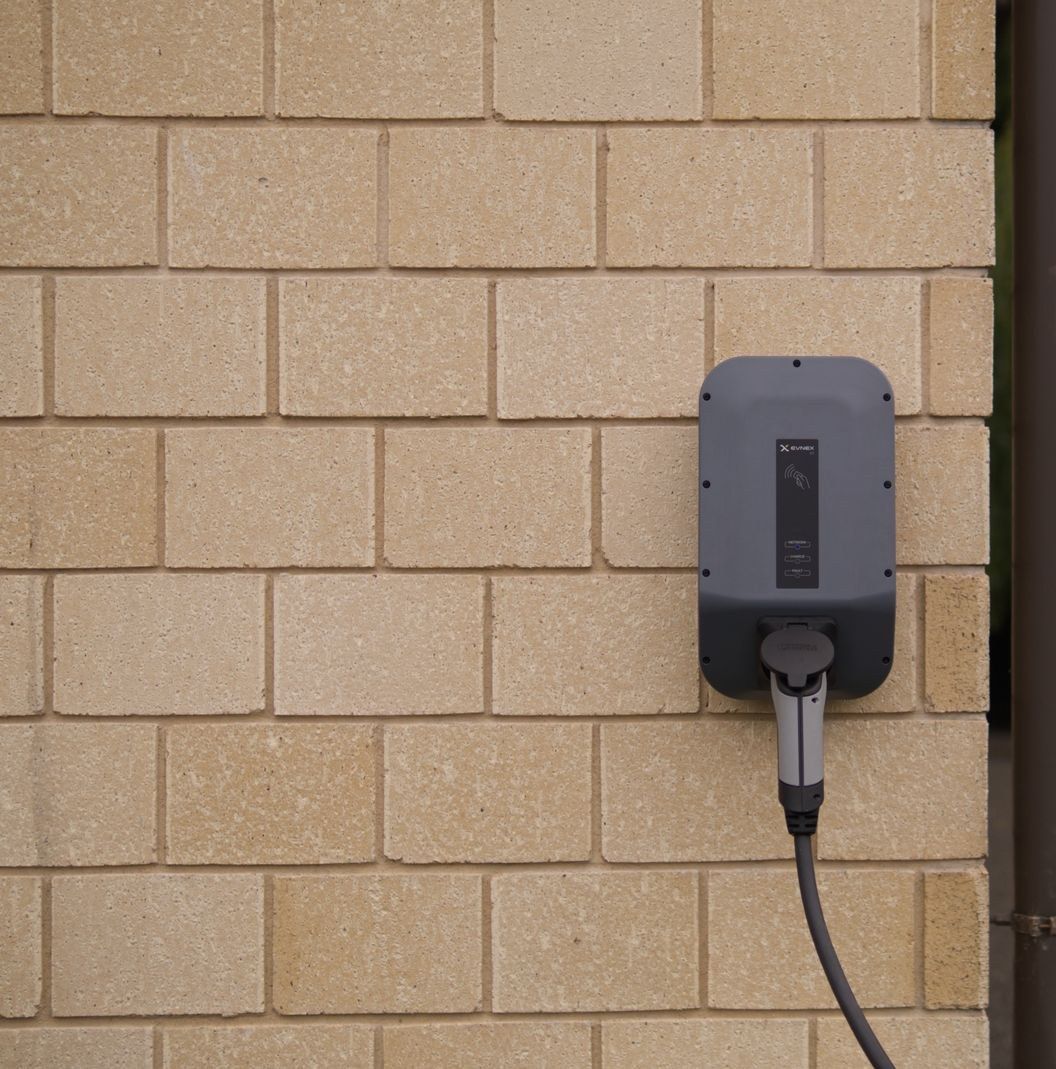
EV Charger Permit requirements across New Jersey
By Mario Bailey Last checked 2026-07-12
Requirements and size thresholds for ev charger permits vary by locality. The table below compares what each New Jersey county or city requires. Always confirm with the local office before starting.
How ev charger permits work, start to finish
Applying
In most of the US, installing a Level 2 (240 volt) home EV charger is handled as an electrical permit built around a load calculation and a single line diagram showing the new dedicated circuit. A Level 1 charger that simply plugs into an existing 120 volt outlet typically needs no permit unless new wiring is added.
- A Level 2 charger needs its own dedicated 240 volt circuit and requires an electrical permit with inspection, since each outlet installed for EV charging must be fed by an individual branch circuit with no other outlets on it (NEC 625.40).
- The application includes an electrical load calculation showing the existing service panel has enough spare capacity for the added EVSE demand, worked out using the standard dwelling load calculation method (NEC 220.83).
- The breaker or other overcurrent device feeding the charger must be sized for continuous duty, rated at not less than 125 percent of the equipment's maximum load (NEC 625.41).
- Plan submittal typically includes a single line diagram showing conductor size, breaker size, conduit, and panel rating, plus the charger's manufacturer specifications, since the EVSE itself must be a listed product (NEC 625.5).
- For charging equipment rated over 60 amps or over 150 volts to ground, the application has to show a disconnecting means installed in a readily accessible location and capable of being locked open (NEC 625.43).
- The charger must be shown connected and fastened in place according to the manufacturer's installation instructions, whether it is hardwired or a plug in unit on a dedicated receptacle (NEC 625.44).
Inspections and close-out
A Level 2 EV charger installation gets a rough wiring inspection if any new conductors will be hidden inside walls, ceilings, or run underground, then a final inspection that checks the dedicated circuit, breaker sizing, any required GFCI protection, the disconnect, and the charger's listing before the permit closes.
- If new EVSE conductors will be concealed in a wall or ceiling, or run underground, they must pass a rough wiring inspection before being covered, since that inspection confirms the dedicated branch circuit required for the charger (NEC 625.40).
- At final inspection, the breaker or other overcurrent device serving the charger is checked to confirm it is properly rated for the continuous EV charging load (NEC 625.41).
- Any receptacle installed for EV charging, as opposed to a hardwired connection, has to be checked for ground fault circuit interrupter protection (NEC 625.54).
- Where the EVSE is rated over 60 amps or 150 volts to ground, the inspector confirms a lockable, readily accessible disconnecting means was installed (NEC 625.43).
- The inspector verifies the charger, along with its fittings and associated equipment, carries a nationally recognized testing laboratory listing (NEC 625.5).
- Mounting height is checked against the manufacturer's instructions, with the coupling means generally required to sit at least 18 inches above an indoor floor or 24 inches above outdoor grade unless the equipment is listed otherwise (NEC 625.50).
General practice; pick your county below for its specific rules, fees, and portal. Sources: National Electrical Code (NFPA 70), Article 625 Electric Vehicle Charging System and Article 220 Load Calculations, 2017 to 2023 editions, National Electrical Code (NFPA 70), Article 625 Electric Vehicle Charging System, 2017 to 2023 editions.
Swipe sideways to see thresholds and confidence.
| Locality | Permit required? | Typical threshold | Confidence |
|---|---|---|---|
| Jersey City | Yes | Not specified | Based on building code |
| No localities match your filter. | |||
Ready to move on your ev charger permit?
Hire it out
Before you sign, ask the contractor:
- Who pulls the permit, you or me, and is the permit fee included in the bid?
- Which inspections will this job need, and who meets the inspector on site?
- Is your contractor license active in this locality, and under which business name?
Want a pro to handle this permit? Request free help
Tell us where your project stands. Free to ask; no obligation.
Where we have a vetted local pro who handles permits in New Jersey, we connect you; otherwise we reply with the exact steps and office links for your situation. PermitNotebook is not a government agency and does not file permits. This is a free referral request; we may earn a fee if you hire a pro we introduce. Partners never influence our permit data. Privacy policy.