Illinois

Solar Permit requirements across Illinois

By Mario Bailey Last checked 2026-06-17

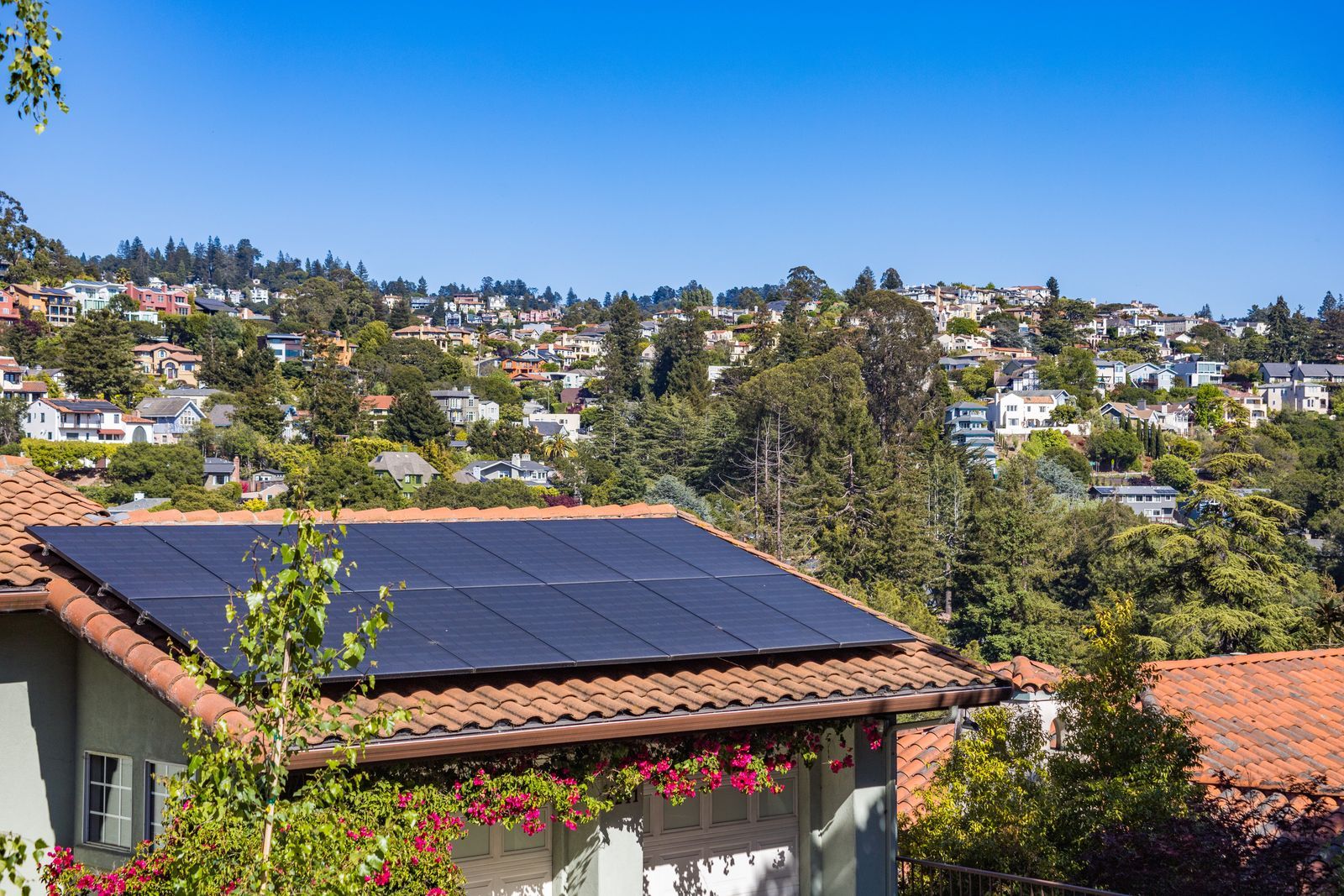
Rooftop solar panels on a tile-roofed house in a hillside neighborhood

Requirements and size thresholds for solar permits vary by locality. The table below compares what each Illinois county or city requires. Always confirm with the local office before starting.

What to know about solar permits in Illinois

Solar permits in Virginia usually cover the rooftop PV system and its electrical interconnection. Costs depend on system size and your locality, and many homeowners weigh financing options such as solar loans against paying up front. Some Virginia localities use SolarAPP+ for faster automated approvals. Always use a licensed electrical or solar contractor, since the work must pass inspection.

How solar permits work, start to finish

Applying

A rooftop solar PV permit application is a combined structural and electrical plan set: a site plan and roof framing details proving the array's mounting can carry its added loads, plus a one line electrical diagram covering listed modules and inverters, disconnects, and the rapid shutdown design. Utility interconnection is a separate approval that runs in parallel with the permit.

  • Both a building permit and a separate electrical permit are required, since the array must be designed and installed to the residential code's solar provisions and to the National Electrical Code (IRC R324.3).
  • The plan set identifies listed equipment: PV modules listed to UL 1703 (or both UL 61730-1 and UL 61730-2), and inverters listed to UL 1741, with grid-tied inverters listed for utility interaction (IRC R324.3.1).
  • Structural drawings show that the roof framing is designed to structurally support the array and withstand the gravity loads it adds (IRC R324.4.1).
  • The site plan lays out roof access pathways at least 36 inches wide, plus a ridge setback sized to how much of the roof the array covers, so firefighters retain pathways and ventilation access (IRC R324.6.1, IRC R324.6.2).
  • The one line electrical diagram shows the rapid shutdown method and the location of its single initiation device, since one control point must bring all system conductors down to safe levels (NEC 690.12, NEC 690.56(C)).
  • Interconnecting the array to the utility grid at a defined point of connection is a separate application process from the local building or electrical permit and must be approved before the system can operate (NEC 705.12).
  • Some permitting offices route applications through SolarAPP+, an automated review platform that checks the plan set against code requirements and issues eligible permits instantly (DOE SolarAPP+).

Inspections and close-out

Inspectors verify the installed array against the approved plans, and some agencies run a rough check of roof attachments and penetrations while they are still exposed before the wiring and roofing close them in. The final inspection confirms rapid shutdown, disconnects, grounding, and required labels are installed correctly, and the system cannot be energized until the utility separately approves interconnection.

  1. Where an agency runs a rough or pre-inspection, it checks the array's roof penetrations while they are still exposed, confirming they are flashed and sealed (IRC R324.4.3).
  2. The inspector confirms whether rapid shutdown is required, how it is accomplished, and that it is properly identified (NEC 690.12, NEC 690.56(C)).
  3. PV disconnecting means must be permanently marked and installed where they are readily accessible, which the inspector confirms in the field (NEC 690.13).
  4. Bonding and grounding of the array, including every exposed non current carrying metal part and the grounding electrode system, is checked before sign off (NEC 690.43, NEC 690.47).
  5. At the service equipment, the inspector looks for the required rapid shutdown placard, a labeled diagram showing the initiation device's location in the specified colors and letter sizes (NEC 690.56(C)).
  6. Utility interconnection is inspected and approved separately from the local building department's sign off, and the system cannot be energized until both approvals are in hand (NEC 705.12).

General practice; pick your county below for its specific rules, fees, and portal. Sources: IRC 2021 R324 (Solar Energy Systems) and NEC 2020 Article 690 (Solar Photovoltaic Systems) and Article 705 (Interconnected Power Production Sources), NEC 2020 Article 690 (690.12 rapid shutdown, 690.13 disconnects, 690.43/690.47 grounding, 690.56 labeling) and IRC 2021 R324.4.3 (roof penetrations).

Swipe sideways to see thresholds and confidence.

Locality Permit required? Typical threshold Confidence
Chicago Yes Not specified From an official source

Ready to move on your solar permit?

Hire it out

Before you sign, ask the contractor:

  • Who pulls the permit, you or me, and is the permit fee included in the bid?
  • Which inspections will this job need, and who meets the inspector on site?
  • Is your contractor license active in this locality, and under which business name?
Want a pro to handle this permit? Request free help

Tell us where your project stands. Free to ask; no obligation.

Where we have a vetted local pro who handles permits in Illinois, we connect you; otherwise we reply with the exact steps and office links for your situation. PermitNotebook is not a government agency and does not file permits. This is a free referral request; we may earn a fee if you hire a pro we introduce. Partners never influence our permit data. Privacy policy.

Planning more than a solar? Check your whole project